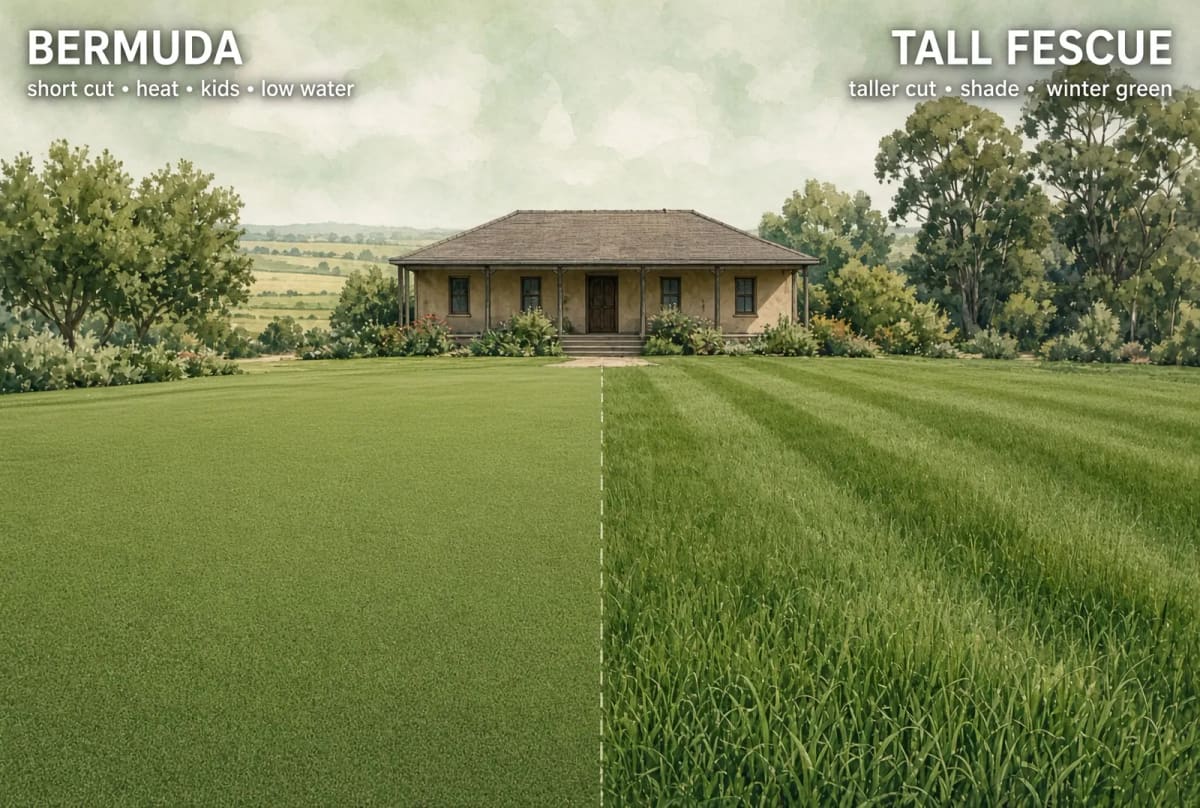
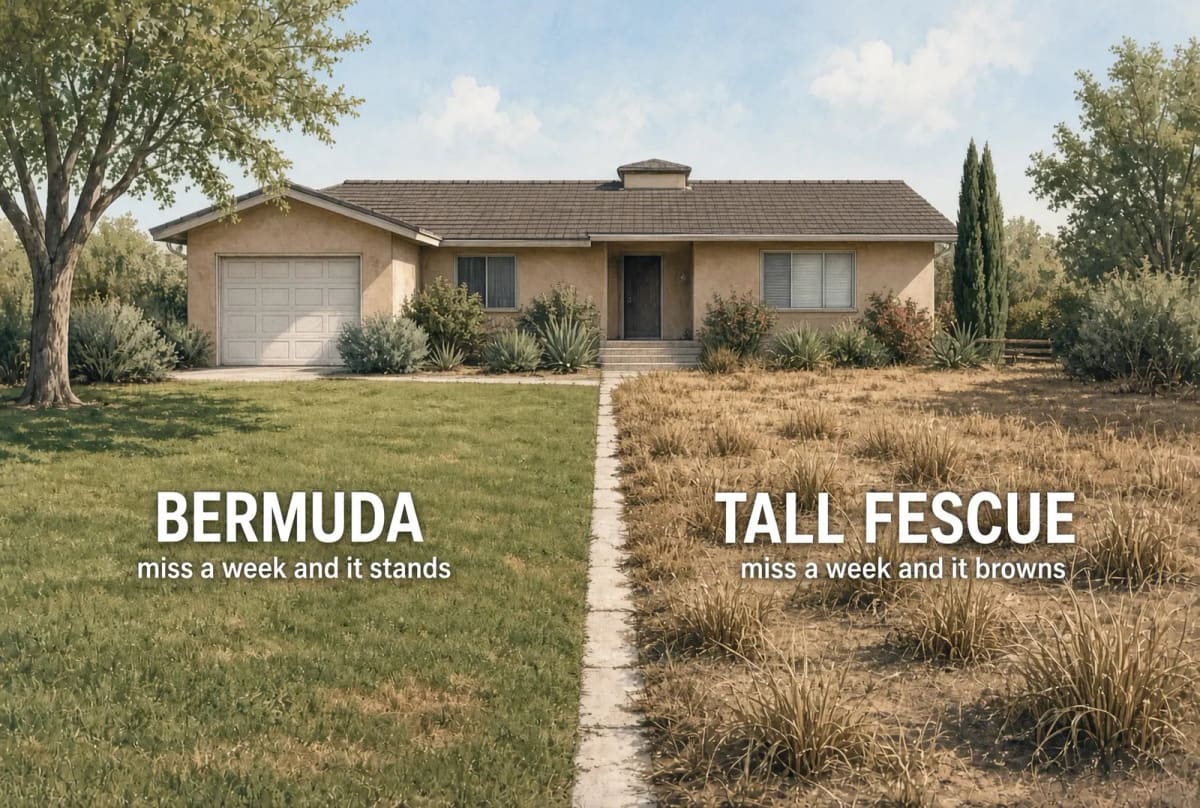
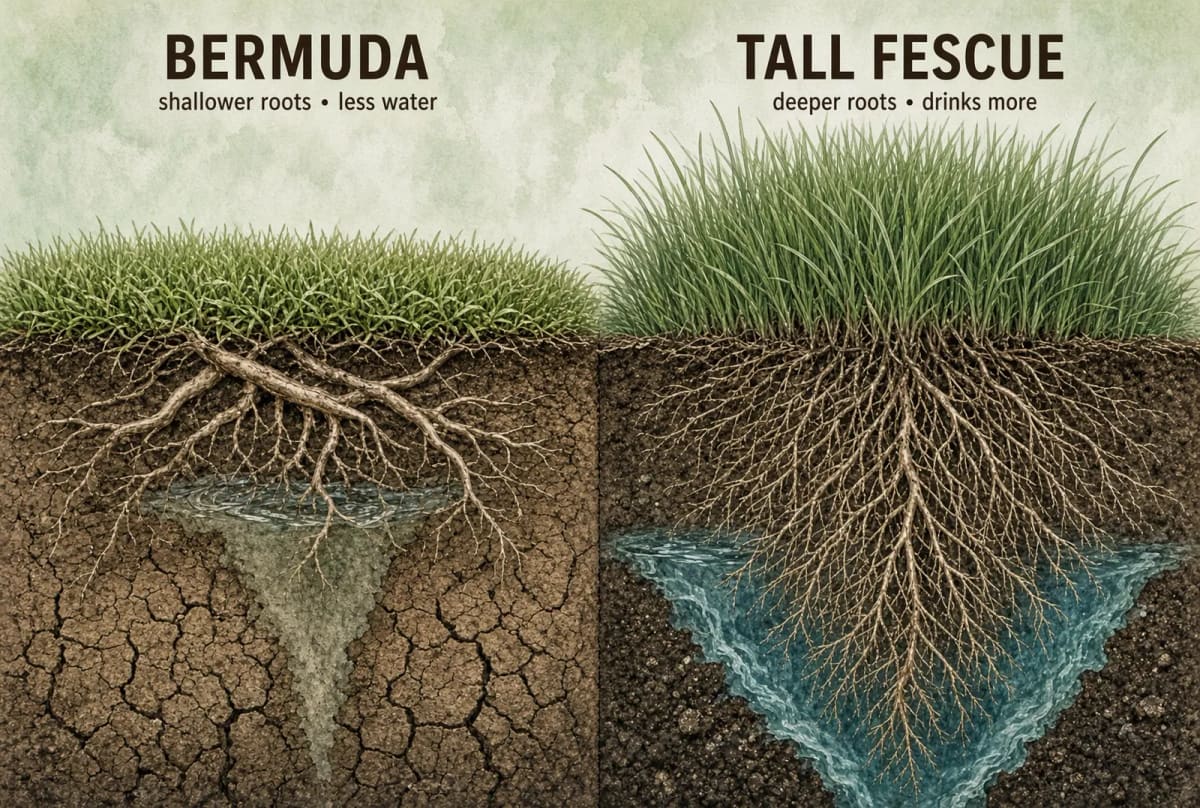
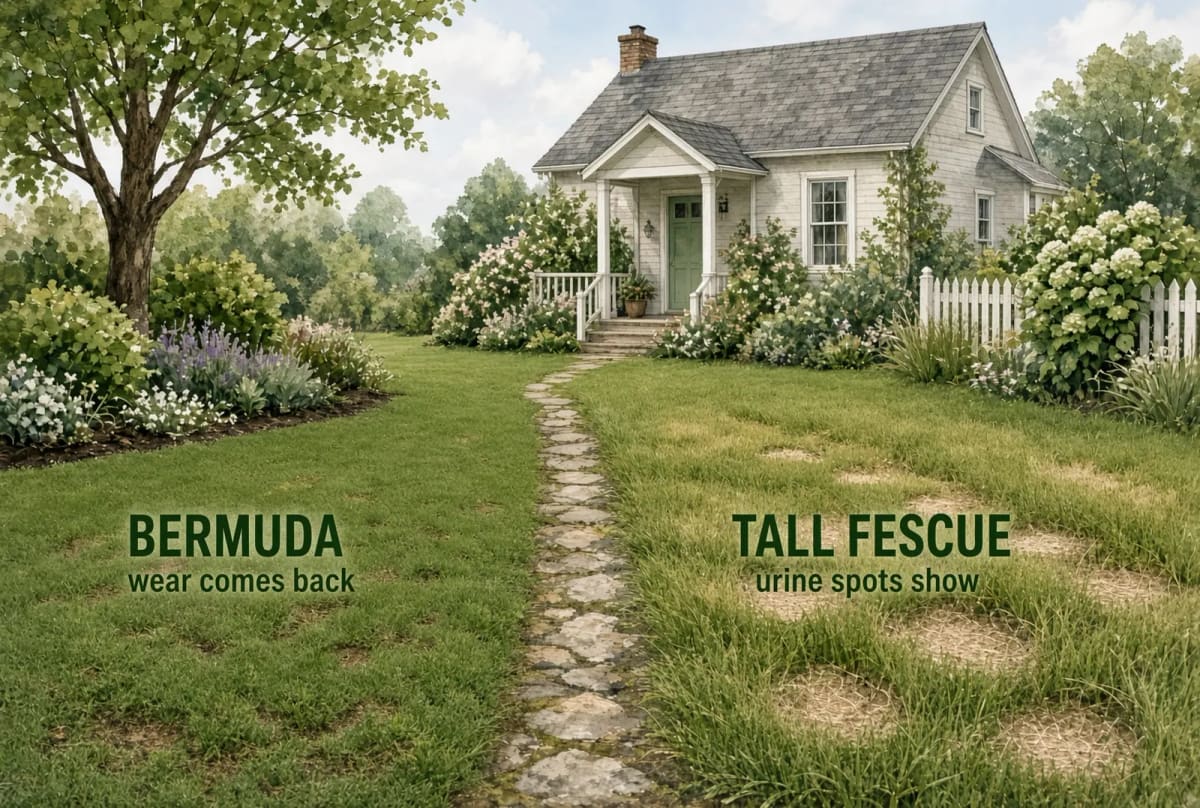
It's the question we get more than any other in Kerman, Fresno, and Clovis: Bermuda or fescue? Short version — Bermuda wins for heat, low water, pets, and kids; fescue wins for shade, year-round green, and that manicured "prairie" look. Here's the fast way to decide.
Which yard are we talking about?
When a customer asks us what to plant, our first question is always: where, and what will you do on it? That answer usually decides it.
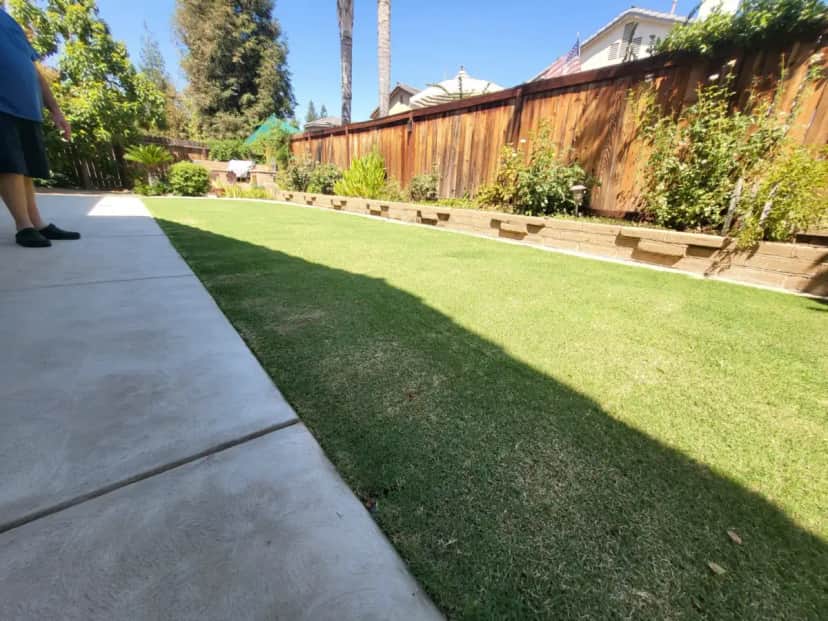
Backyard, with pets or kids running around
→ BermudaShorter, tougher grass that bounces back from wear — and far more resistant to pet urine than fescue.
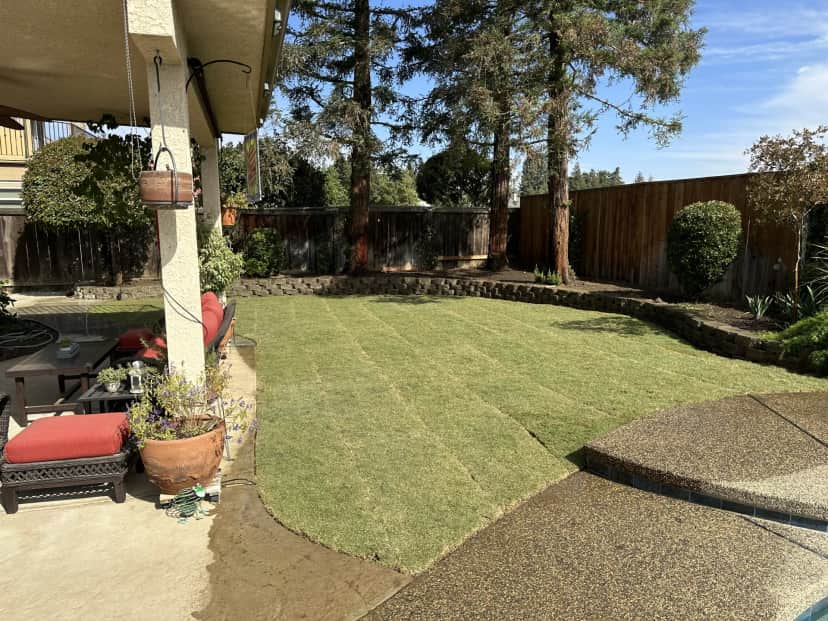
Front yard, you want the showpiece look
→ FescueThat soft "prairie" lawn people admire. It's easier to stripe and simply nicer to look at.
Front yard that's flat, or has lots of tree debris
→ BermudaGrows level and low, so leaves and debris are easy to clean up — and a smooth Bermuda lawn looks sharp.
Front yard that's sloped or uneven
→ FescueFescue looks great on a slope, where a low Bermuda lawn is harder to appreciate.
Still on the fence?
Every yard has quirks — sun angles, tree roots, a slope you didn't notice, an old sprinkler line. Tell us the address and we'll walk it with you, then recommend the exact grass (and cultivar) for it. Free, no pressure.
Get a free grass recommendation →Or call (559) 809-1230 — Rosie or one of the team picks up.
Not all Bermuda is the same
This is the part most homeowners don't know: "Bermuda" isn't one grass. In the Valley we install a few different cultivars, and they look nearly identical once they're in — so you have to ask for the right one up front.
Celebration
The common hybrid and the one most people go with. Great all-around choice for full-sun yards.
Tifway
Finer texture, a more manicured look. A step up when appearance matters.
Best for shadeTifTuf
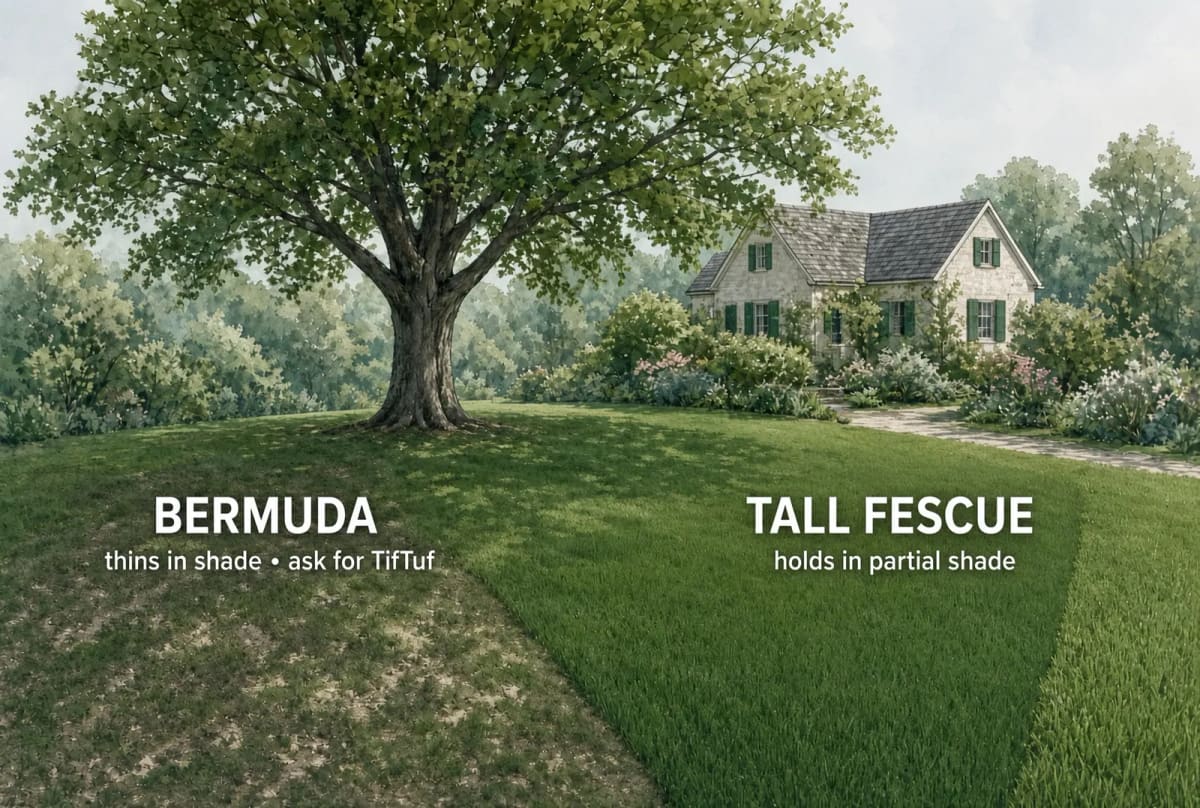
The most shade-tolerant Bermuda for our area. If your yard is shaded, this is the one.
⚠️ Shaded backyard? Ask for TifTuf by name.Regular Bermuda thins out and struggles in shade. The cultivars look almost identical on the truck, so tell your landscaper specifically you want a shade-tolerant Bermuda like TifTuf — otherwise you may end up with common Bermuda that won't fill in.
The winter catch: Bermuda goes dormant
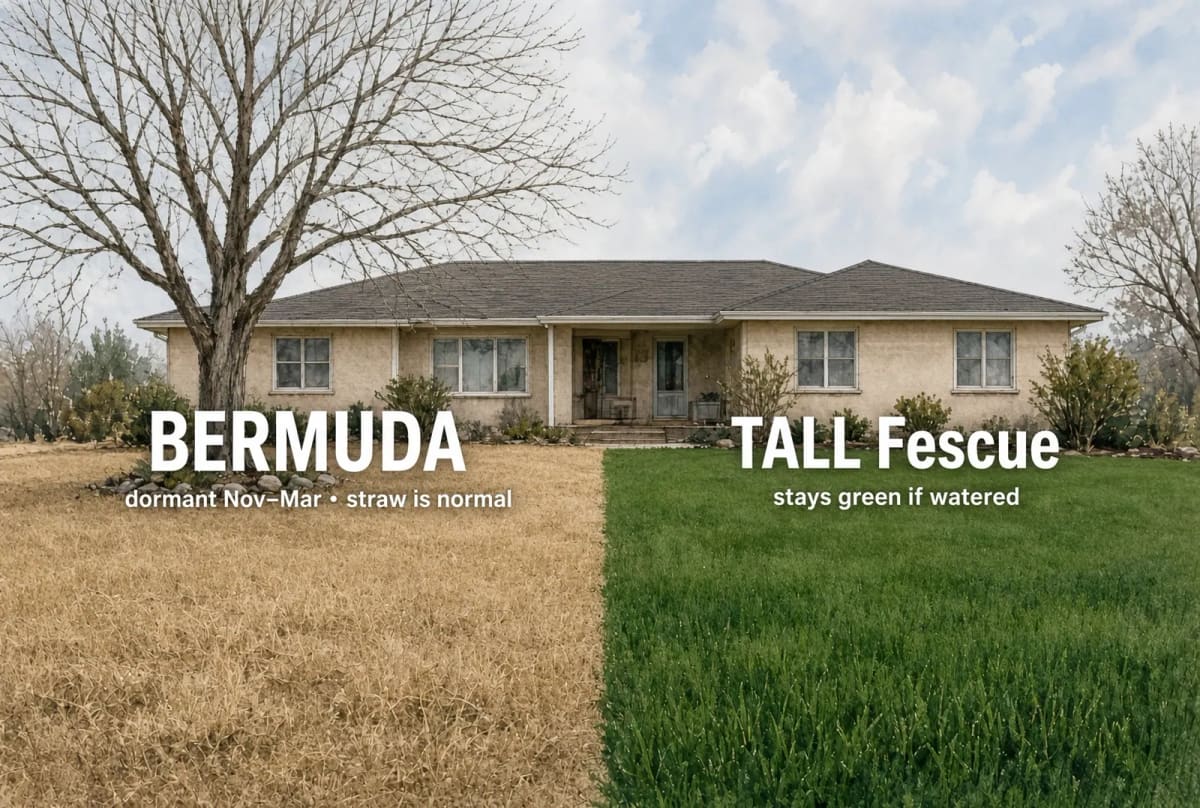
Bermuda turns straw-brown roughly November through March in the Central Valley. That's normal — it's dormant, not dead, and it greens right back up in spring.
Want green all year with Bermuda? Overseed.A lot of homeowners overseed with annual ryegrass in fall to stay green through winter — it's an extra step, but it works. Here's our full guide to overseeding Bermuda with ryegrass.
If you'd rather never think about it, fescue stays green year-round (with enough water). That's fescue's biggest edge.
Pets on the lawn (and a hack that saves it)
Pet urine burns any grass — the culprit is concentrated nitrogen and salts in the urine, which scorch the spot and leave a yellow patch. Bermuda handles it far better than fescue, but neither is bulletproof.
🐾 The rinse hackRight after your dog goes, pour a little water on the spot. It dilutes the nitrogen and salts before they can burn the roots — the difference between a green lawn and a field of yellow dots. Simple, free, and it works on both grasses.
The full side-by-side
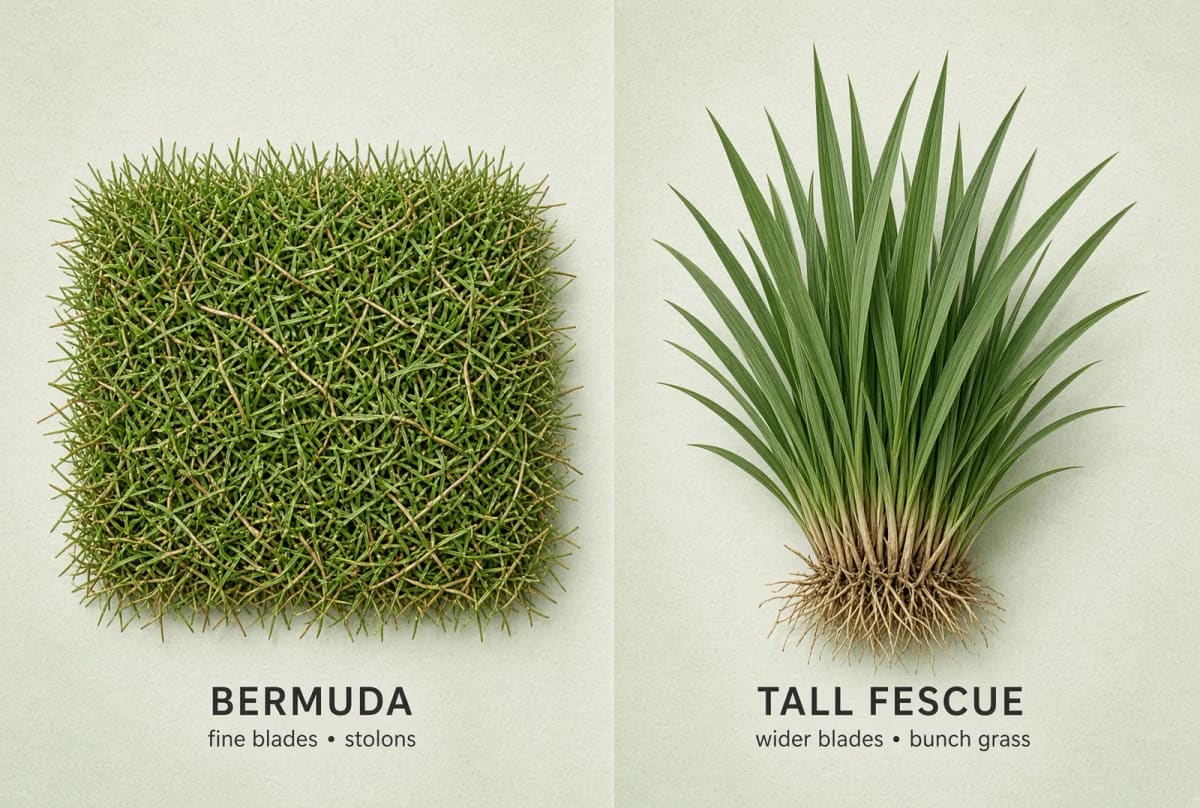
Want the details? Here's the complete comparison.
One more thing worth knowing: miss a few days of watering in July and fescue can die back and be hard to recover. Bermuda is far more forgiving if life gets in the way.
Can I mix Bermuda and fescue?
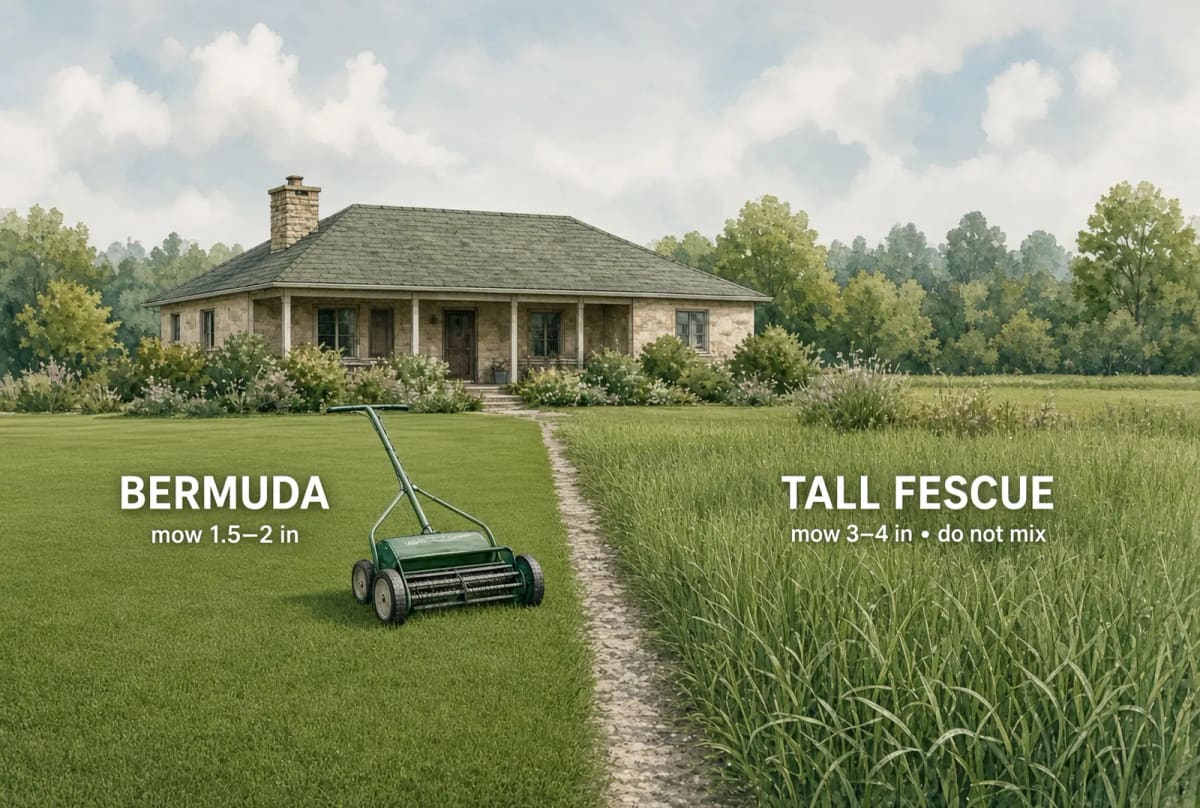
No — we don't recommend it. They're different grasses with different mowing heights (1.5–2 in. vs. 3–4 in.) and growth habits, and Bermuda will aggressively invade the fescue and leave you with a patchy, uneven lawn.
The only smart way to "mix" is by area: Bermuda in one space, fescue in another — for example fescue in the shaded front and Bermuda in the sunny, high-traffic back — with clean edging between them.
What a lawn conversion really costs
Typical conversion project$5,000–$9,000Across the front- and backyard lawn conversions we do in the Valley, most land around $7,000 all-in — removal, soil prep, sod, sprinkler adjustments, and labor. Prices vary with size, access, and prep. This isn't your quote — it's so you know the ballpark before we ever talk.See if your yard fits →
We handle the full process — from removing old grass to soil prep to sod installation — so you're not coordinating multiple contractors.
Our bottom line
After years installing and maintaining lawns across Kerman, Fresno, and Clovis, here's what we tell our clients:
- Full sun, want low water and low fuss → Bermuda
- Shade, or you want green all year without overseeding → Fescue
- Backyard for pets and kids → Bermuda (get TifTuf if it's shaded)
- Front yard you want to show off → Fescue for the look, or a smooth Bermuda if it's flat
Whatever you choose, the real make-or-break is soil prep and installation. The wrong grass on well-prepped soil still beats the right grass on bad soil, every time.
The tiebreaker: your yard
Add up the wins and it's honestly dead even, three each. So the tie goes to the one thing we haven't scored yet: your yard.
Bermuda vs. fescueBermuda3–3Fescue
A 3–3 tie, and you break it.
The deciding point is your yard: sun or shade, play or looks, year-round green or a lower water bill. Tell us about it and we'll call the winner with you.
Break the tie for my yard →
Book a free consultation and we'll recommend the best grass for your specific yard. Or call (559) 809-1230.