
The quote is the price
We put it in writing after an in-person walk-through. No surprise add-ons, no scope-creep charges halfway through the project.
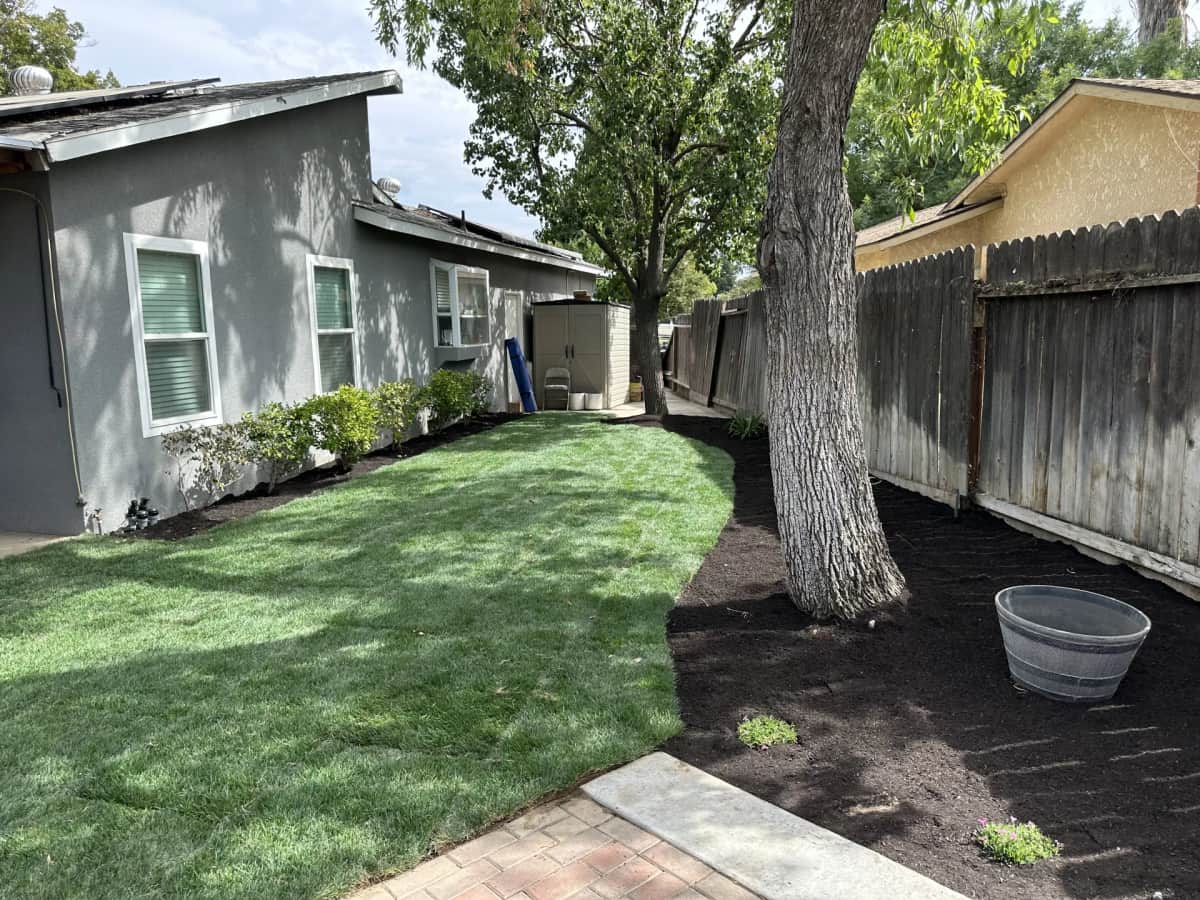
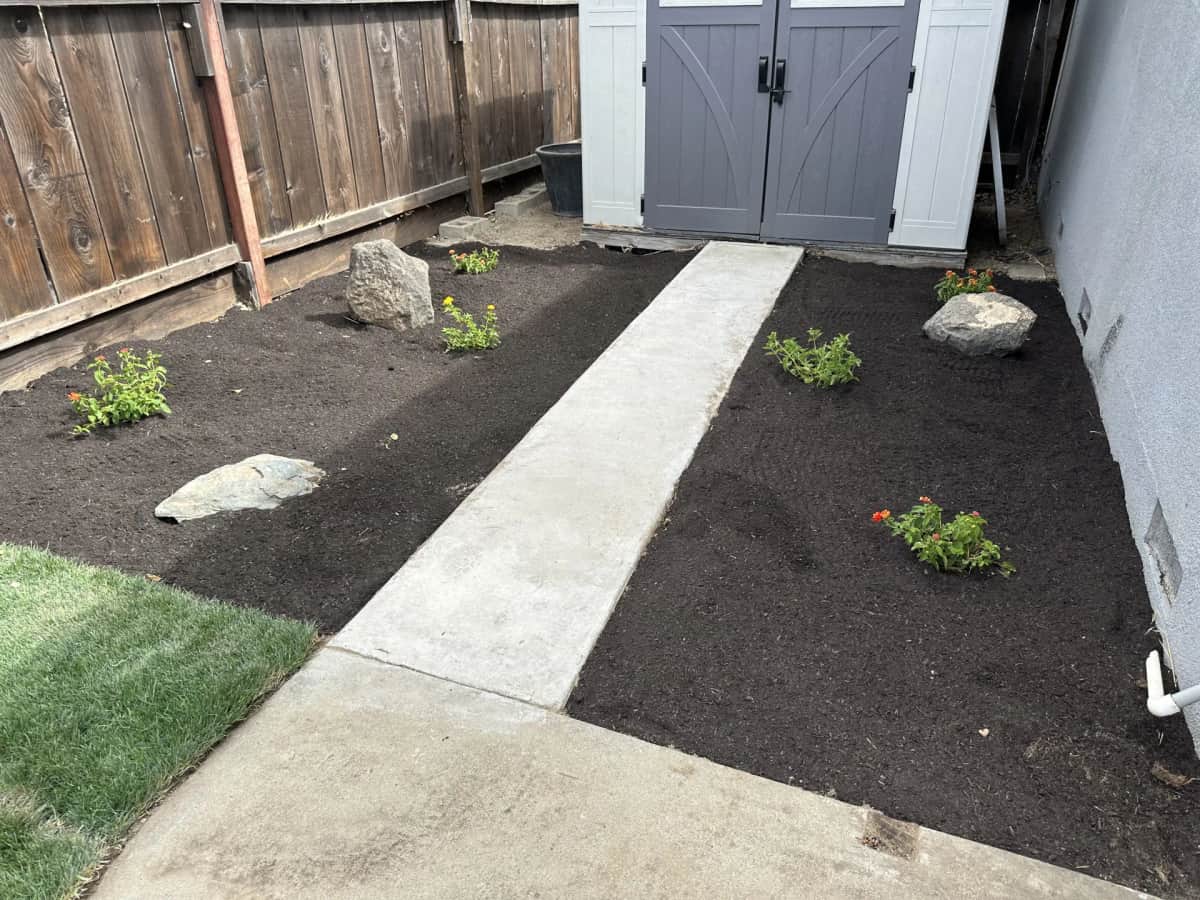
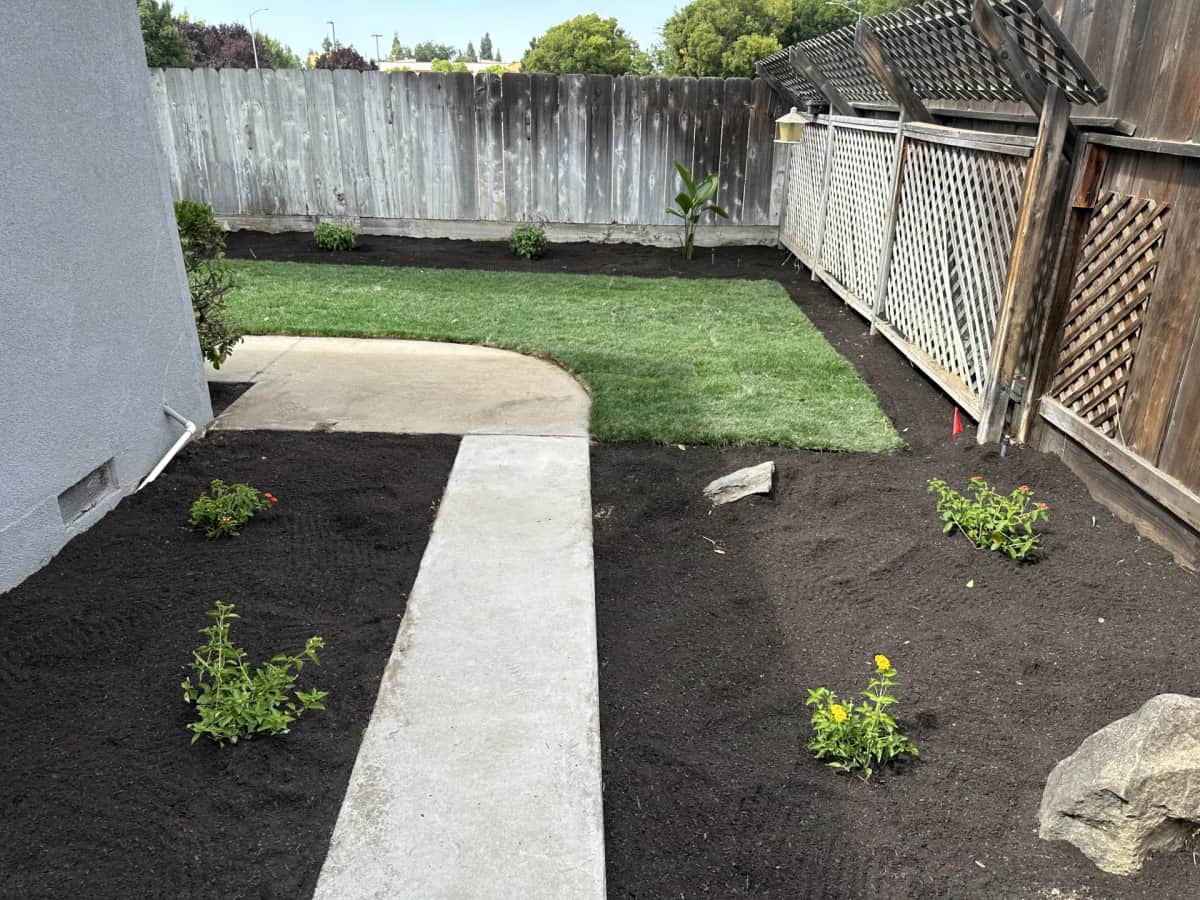
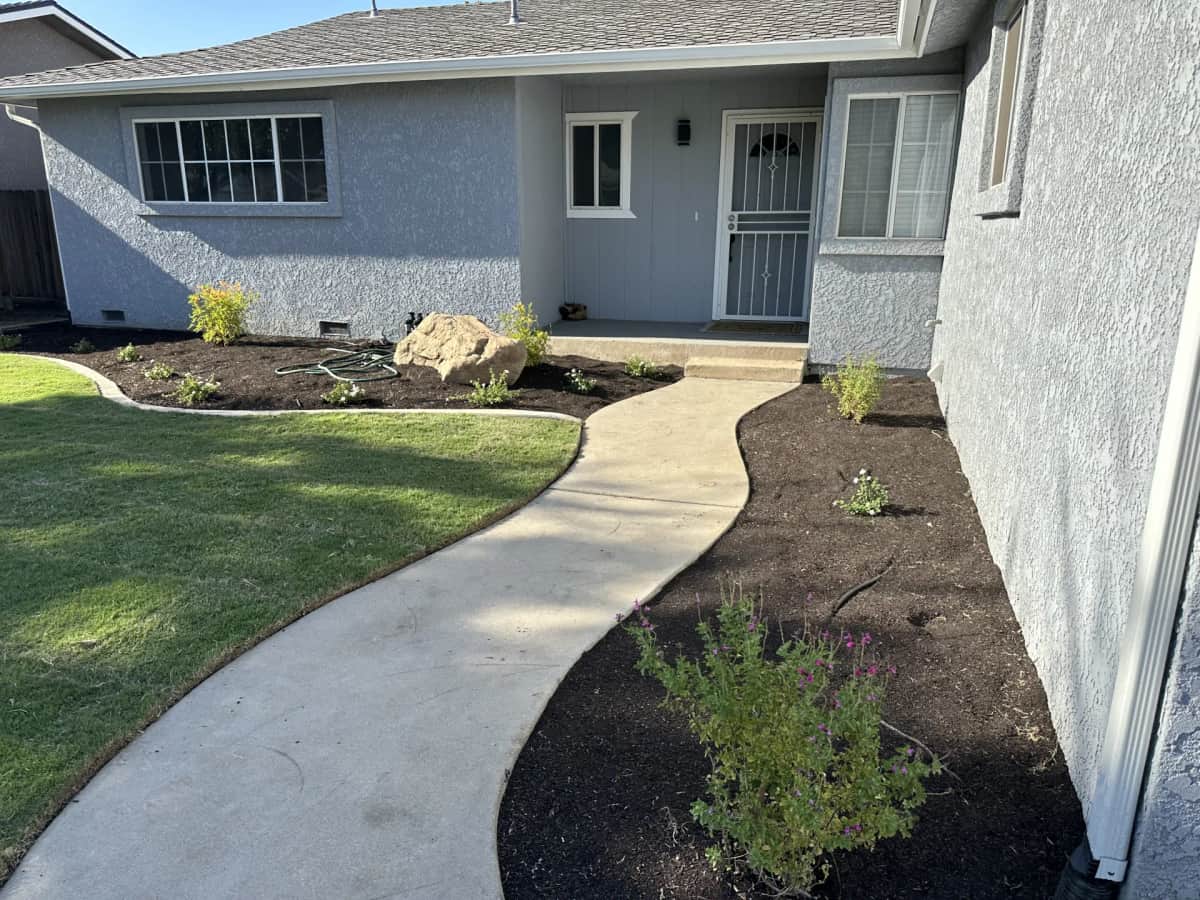
The finishing touch that makes your landscape pop. Quality mulch conserves water, controls weeds, and elevates your curb appeal.
The things people worry about most before a one-time job — and how we handle each one. Swipe →
Before we dig, we walk the job, talk through scope and materials, and confirm exactly what you want — so the finished yard matches the one in your head.
Before we dig, we walk the job, talk through scope and materials, and confirm exactly what you want — so the finished yard matches the one in your head.
Drainage, grading, alkaline soil, old irrigation — years of Central Valley yards mean we flag what could go wrong before it does, not after the bill.
We put it in writing after an in-person walk-through. No surprise add-ons, no scope-creep charges halfway through the project.
A clear start and finish date, and the same crew on-site until it’s done. No half-finished yards, no disappearing act.
Proper prep and the right materials so it holds up in Valley heat. If something isn’t right, we come back and make it right.
CSLB #1151584, fully insured, and based right here in the Valley — a real crew with a real address, not a fly-by-night.
Fresh mulch and clean flowerbeds are the fastest way to make a yard look finished. It’s the right call if you’re in any of these spots.
Homeowners who want to refresh tired-looking flowerbeds with new mulch
Anyone looking to reduce weeds and retain soil moisture in hot summers
Property owners wanting seasonal color rotations (spring flowers, fall mums)
Homeowners building new flowerbeds from scratch around patios or walkways
We’ll help you pick the right material for your beds, your budget, and how much upkeep you want.
Natural bark chips that decompose slowly, enriching soil over time. Classic look for garden beds and around trees.
Fine-textured mulch that interlocks for excellent weed suppression and moisture retention. Great for slopes.
Permanent, low-maintenance option in various colors and sizes. Perfect for drought-tolerant landscapes and modern designs.
Rich organic material that improves soil structure and fertility. Ideal for beds where you want maximum plant growth.
Long-lasting, non-decomposing option that is great for play areas and high-traffic beds. Available in multiple colors.
Smooth, rounded stones that create a natural dry creek bed look. Excellent drainage and zero maintenance.
Mulch is more than looks — here’s what a proper layer actually does for a Central Valley yard.
Reduces soil evaporation by up to 70% — critical when every drop counts under local watering restrictions.
A proper mulch layer blocks sunlight from reaching weed seeds, dramatically reducing the need for weeding or herbicides.
Insulates soil against Fresno's 100°F+ summers, keeping roots cooler and reducing heat stress on plants.
Fresh mulch instantly elevates the look of any landscape. Clean beds, defined borders, and a polished finish.
Transparent pricing for Central Valley homeowners. Every estimate is free.
These are the three cities we get asked about most, so here are the local details instead of generic copy.
Mulch and flowerbeds are just the start. In Fresno, Kerman, and Clovis we keep your whole yard going — pick what fits.
Bi-weekly or every-4-weeks mowing, edging, and blow-off. Same crew, like clockwork — no contracts.
See mowing plansCleanups, overgrown resets, pre-sale tidy-ups, and one-off mows. No commitment.
Request a one-time jobMulch, rock, sod, DG, artificial turf, sprinklers, and full landscape design — start to finish.
Plan a project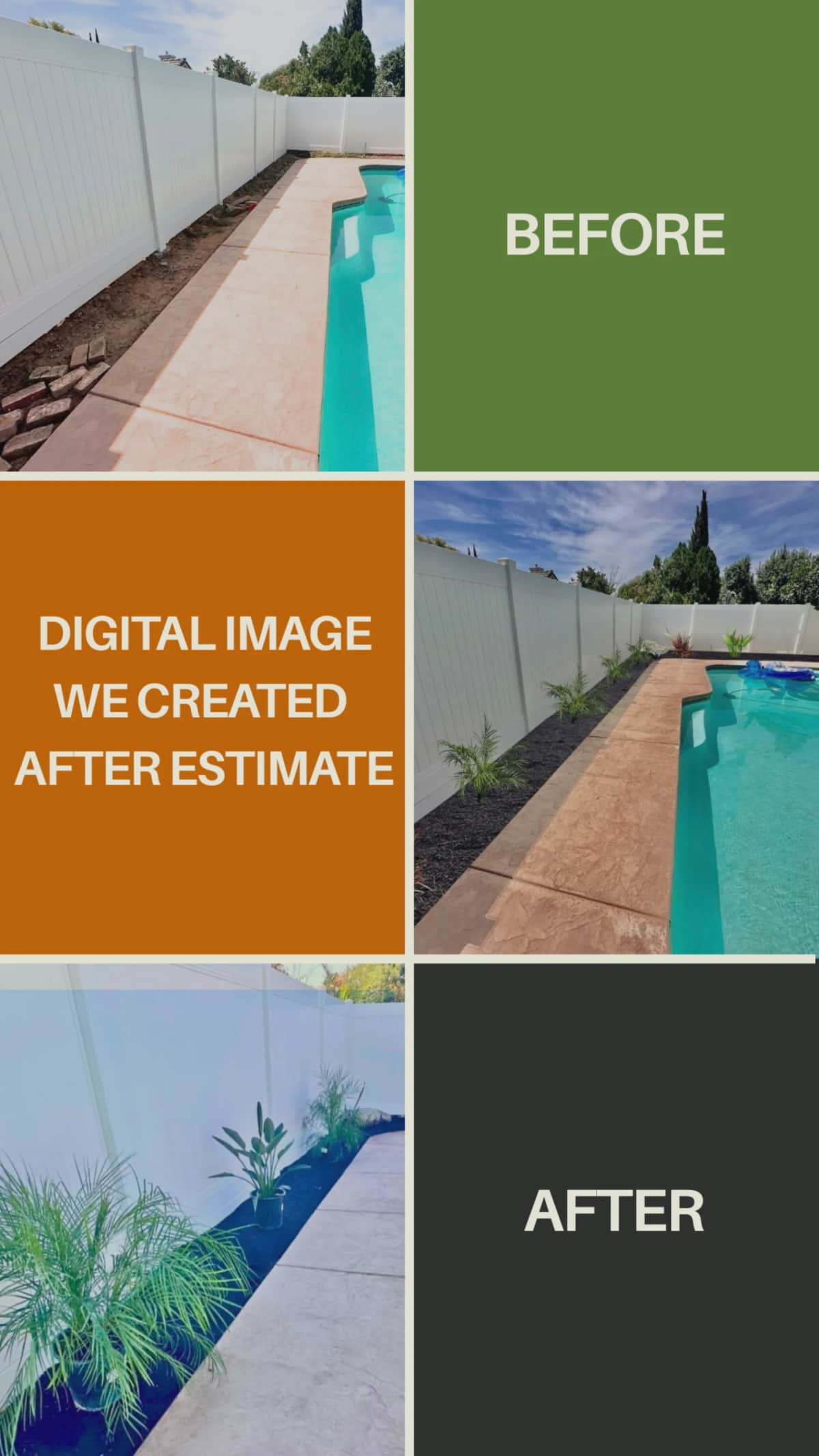
Related services that pair well with this one.
Free in-person estimate. We measure your beds, talk material options, and give you a clear price — no pressure.
Free in-person estimate. We measure your beds, talk material options, and give you a clear price — no pressure.
Get Started