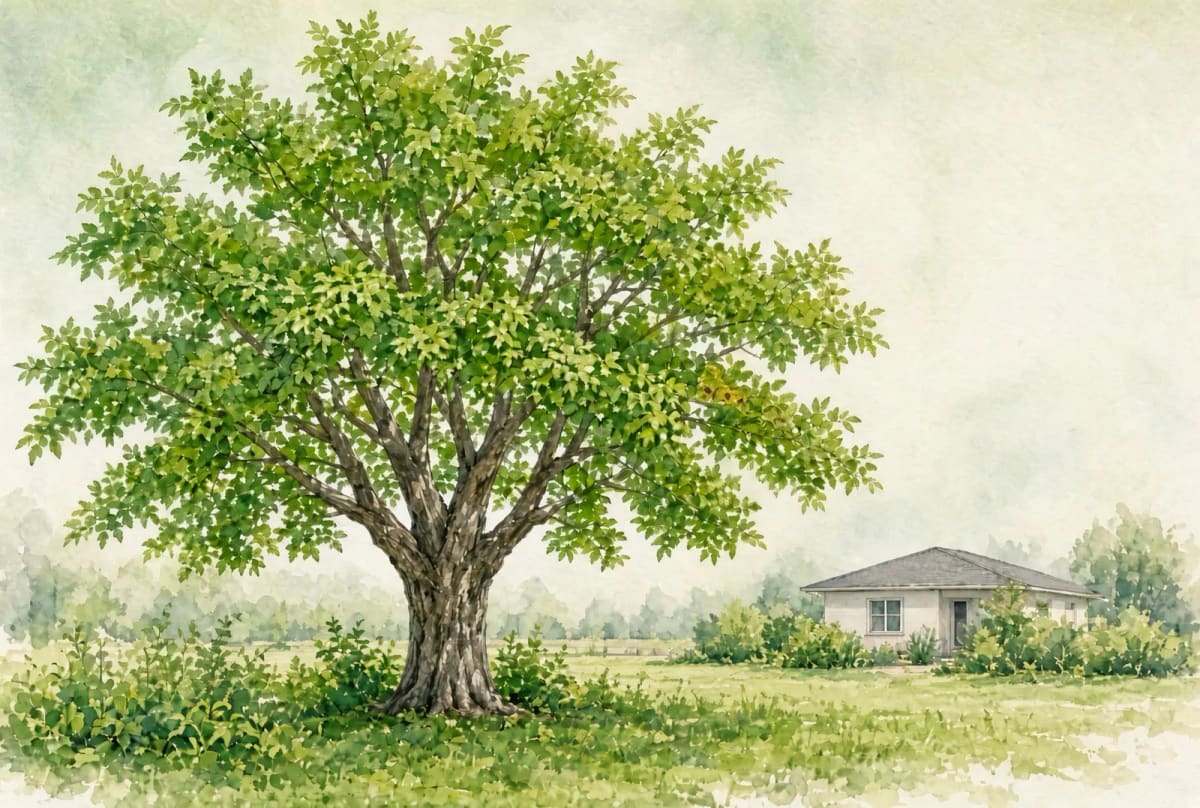
Desert Willow · Meet the plant
Pink trumpets from late spring through fall, right when the yard needs it.
Chilopsis linearis. Tree, pick 1 of 15.
Desert Willow · Water needs and sun
Very low water and full sun. Once it is in, it lives on rain.
No supplemental water needed once established, except during extreme heat waves.
Set the timer20 min · once a day · once a week
With 2 bubblers (10 GPH each). First summer after planting: add 5 minutes.
Desert Willow · Mature size
15 to 25 feet tall and 15 to 20 wide. Smaller than the pistache.
15–25 feet tall, 15–20 feet wide.
Desert Willow · Maintenance tip
A drooping Desert Willow is usually drowning. Water it less.
Avoid overwatering. It actually performs better with less. Prune in late winter to shape.
Desert Willow · Why it works in Fresno
Native to the Southwest. Fresno heat is home.
Desert Willow is native to the Southwest and completely at home in the Central Valley. It produces showy pink, purple, or white trumpet-shaped flowers from late spring through fall, exactly when your yard needs color most. It is deciduous, dropping narrow leaves in winter for easy cleanup.
Chinese Pistache · Meet the plant
Summer shade that still holds in Fresno heat.
Pistacia chinensis. Tree, pick 2 of 15.
Chinese Pistache · Water needs and sun
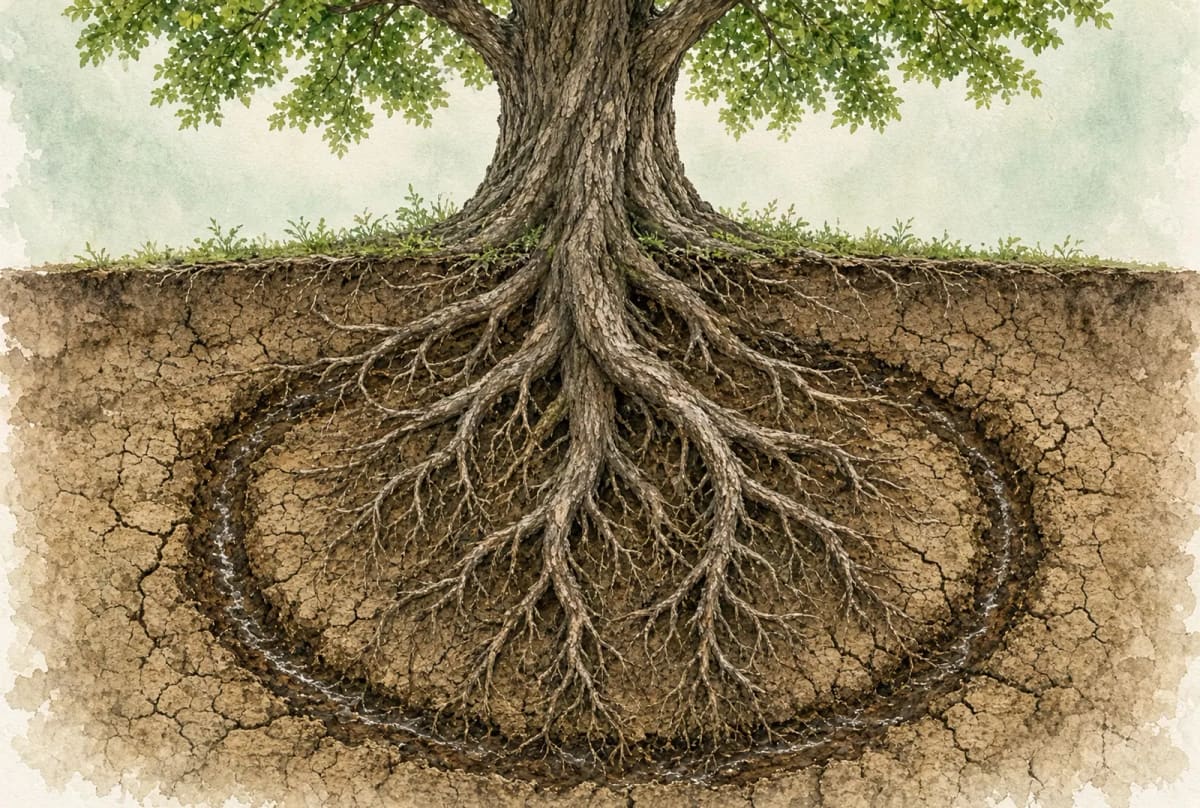
Low to moderate water. Deep and rare beats a daily sprinkle.
Full sun. Water deeply once every 2–3 weeks in summer during the first two years. After establishment, it can survive on natural rainfall plus minimal supplemental irrigation.
Set the timer30 min · once a day · once a week
With 2 bubblers (10 GPH each). First summer after planting: add 5 minutes.
Chinese Pistache · Mature size
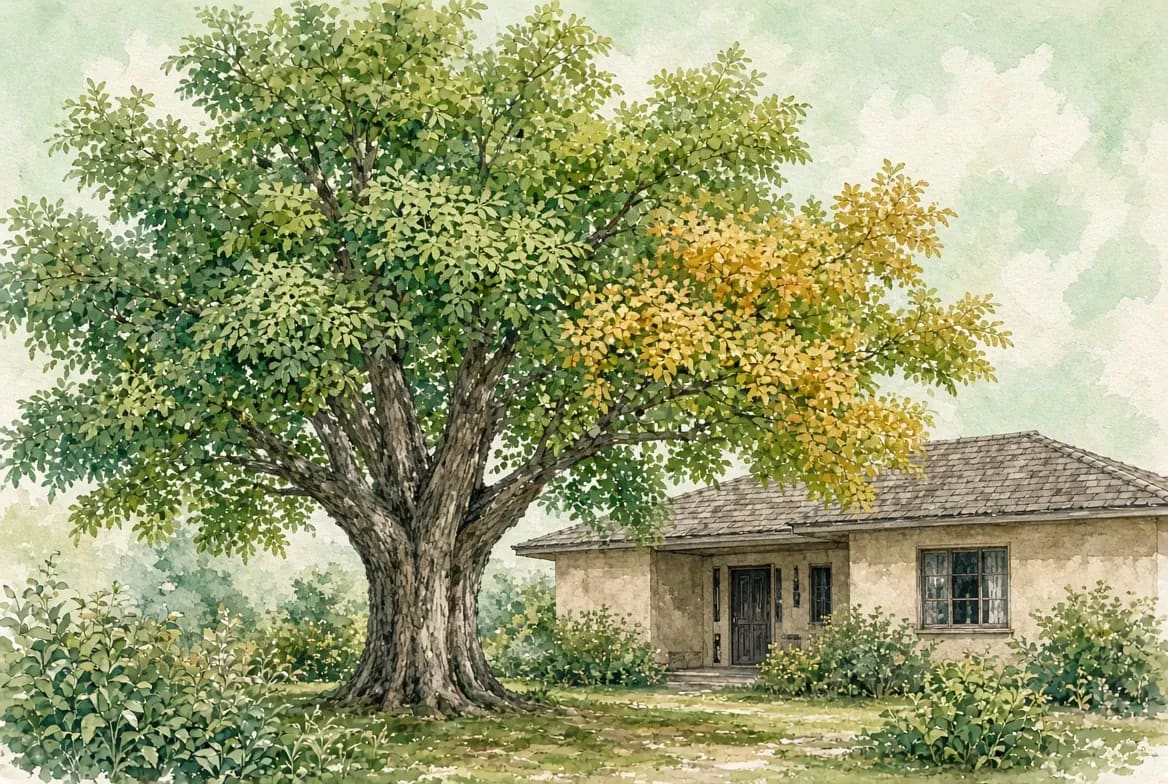
25 to 35 feet. Give it room or it owns the yard.
25–35 feet tall, 25–35 feet wide.
Chinese Pistache · Maintenance tip
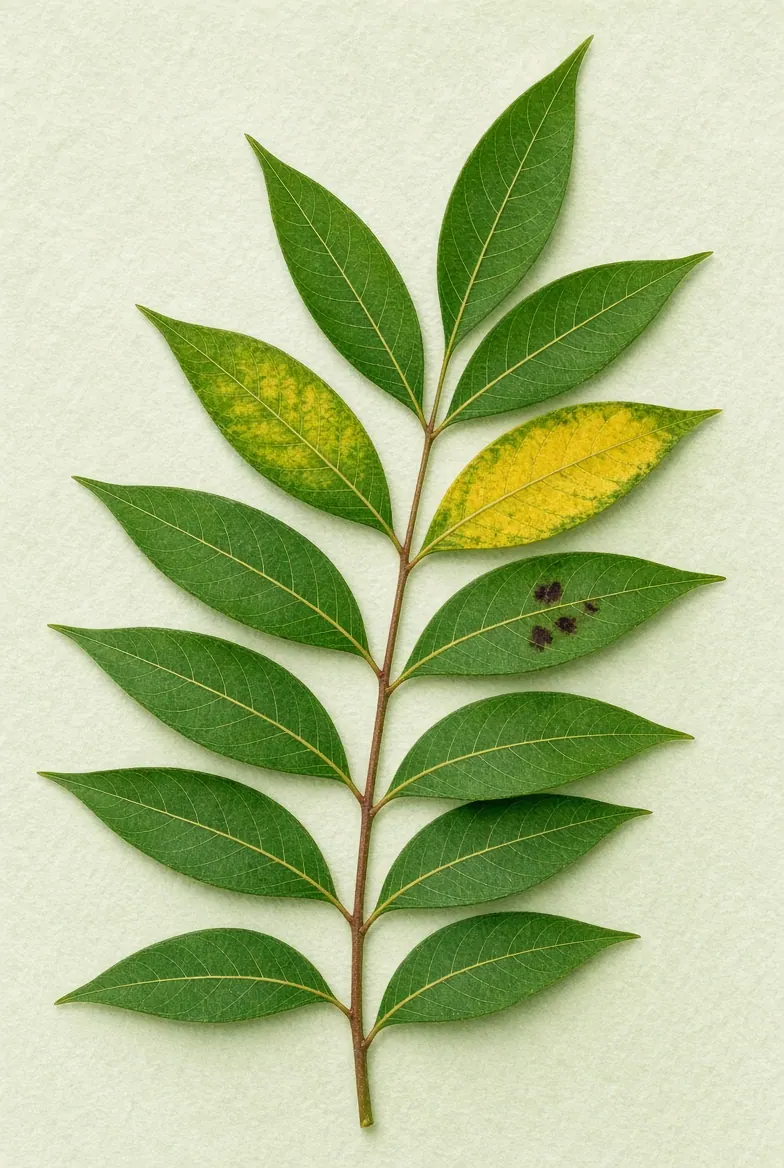
Yellow leaves in this soil usually means iron, not a dead tree. Plant a male tree and you skip the berry mess.
Select a male tree to avoid the small berries females produce.
Chinese Pistache · Why it works in Kerman
This is why people plant it.
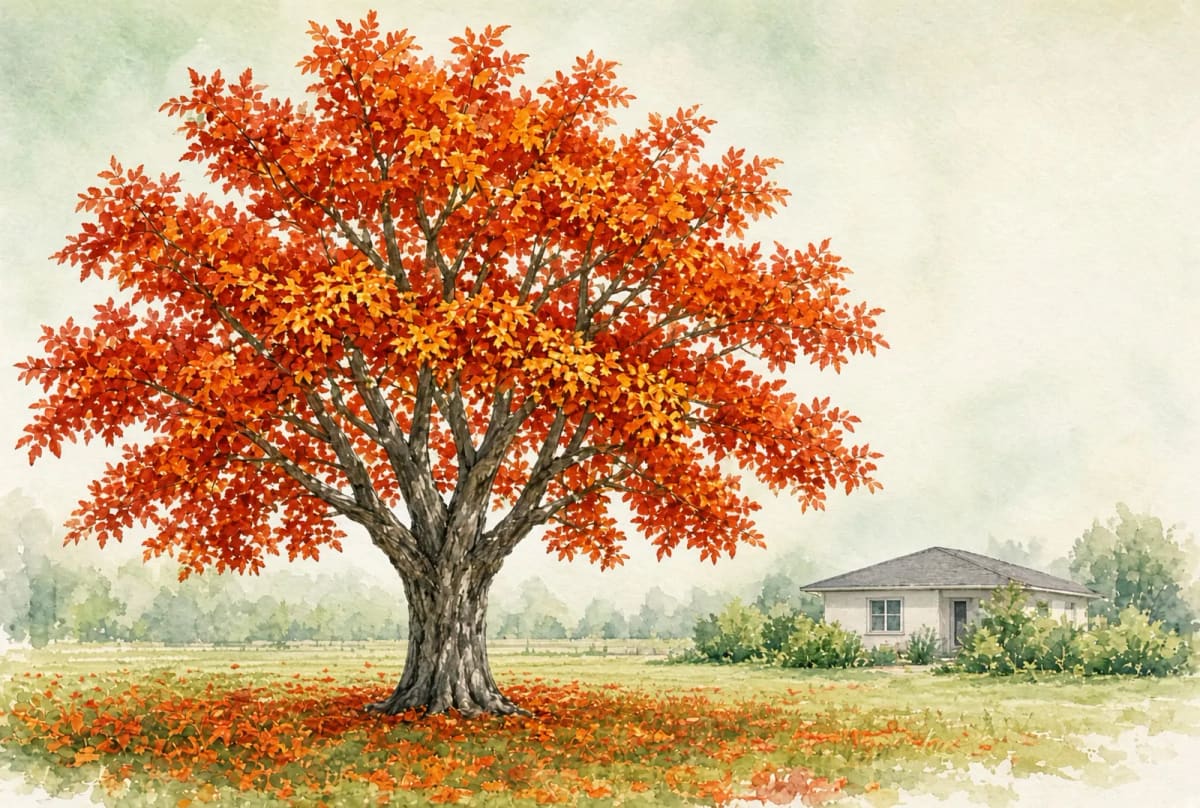
Chinese Pistache is one of the most popular shade trees in Fresno and Clovis for good reason. It provides excellent summer shade, tolerates alkaline soil and heat, and delivers brilliant red-orange fall color, one of the few trees that gives genuine autumn color in the Central Valley. The City of Fresno includes it on their recommended street tree list.
Crape Myrtle · Meet the plant
Heavy bloom in July, August, and September when everything else quits.
Lagerstroemia indica. Tree, pick 3 of 15.
Crape Myrtle · Water needs and sun
Low to moderate water. A deep soak every 1 to 2 weeks in summer.
Full sun. Water deeply every 1–2 weeks in summer once established.
Set the timer30 min · once a day · once a week
With 2 bubblers (10 GPH each). First summer after planting: add 5 minutes.
Crape Myrtle · Mature size
10 to 25 feet tall. It depends on the variety, so ask.
10–25 feet tall (varies by variety), 10–20 feet wide.
Crape Myrtle · Maintenance tip
White powder on the leaves is mildew. Thin it in winter, never top it.
Do not commit "crape murder", the aggressive topping that ruins the tree's natural form. Instead, remove spent flower clusters and thin crossing branches in winter.
Crape Myrtle · Why it works in Clovis
Color in the hottest months, then bark and fall color.
Crape Myrtles bloom heavily in the hottest months, July, August, and September, when most other flowering plants have checked out. Available in white, pink, red, and purple, they are one of the most colorful summer-blooming trees for the Valley. They also have attractive exfoliating bark and good fall color.
Olive Tree · Meet the plant
Silver-green leaves that never drop, on a tree that shrugs off heat.
Olea europaea. Tree, pick 4 of 15. Evergreen silver-green foliage with a Mediterranean elegance.
Olive Tree · Water needs and sun
Very low water. Full sun. Once it is in, it barely drinks.
Once established, olive trees need almost no supplemental water. They thrive in alkaline soil and extreme heat.
Set the timer20 min · once a day · once a week
With 2 bubblers (10 GPH each). First summer after planting: add 5 minutes.
Olive Tree · Mature size
20 to 30 feet each way. As wide as it is tall.
20–30 feet tall, 20–30 feet wide.
Olive Tree · Maintenance tip
Olives on the walk are the mess. Plant a fruitless one like Swan Hill.
Select a fruitless variety (like Swan Hill or Wilsonii) to avoid the mess of fallen olives. Prune annually to maintain shape and thin the canopy.
Olive Tree · Why it works in Fresno
A Valley staple for over a century.
Olives are a Central Valley staple. The region has been growing them commercially for over a century. As ornamentals, they provide evergreen silver-green foliage, drought tolerance that is nearly unmatched, and a Mediterranean elegance. They thrive in alkaline soil and extreme heat.
Rosemary · Meet the plant
Evergreen, fragrant, and about as tough as a shrub gets.
Rosmarinus officinalis. Shrub, pick 5 of 15. Blue flowers in late winter through spring.
Rosemary · Water needs and sun
Very low water. Full sun. Heat, poor soil, and drought do not bother it.
Plant in well-drained soil and water sparingly once established.
Set the timer10 min · twice a day · once a week
With 1 emitter (2 GPH). First summer after planting: add 5 minutes.
Rosemary · Mature size
2 to 6 feet, upright as a hedge or trailing down a slope.
2–6 feet tall depending on variety (upright or trailing).
Rosemary · Maintenance tip
Brown branches in wet soil is overwatering. Cut the water, not the old wood.
The most common way to kill rosemary is overwatering. Prune after flowering to maintain shape, and do not cut into old wood. It does not regenerate well from bare stems.
Rosemary · Why it works in Kerman
Bulletproof in the Valley.
Rosemary is essentially bulletproof in the Central Valley. It thrives in heat, poor soil, and drought. It provides evergreen structure, fragrant foliage, and blue flowers in late winter through spring. Use trailing varieties as ground cover on slopes, or upright varieties as hedges and borders.
Lantana · Meet the plant
Nonstop color from spring to the first frost.
Lantana camara. Shrub, pick 6 of 15. Yellow, orange, red, pink, purple, and multi-color varieties. A magnet for butterflies and hummingbirds.
Lantana · Water needs and sun
Low water. Full sun. A deep drink now and then means more flowers.
Water once per week in peak summer for the best flower production; it can survive on less but flowers more with occasional deep watering.
Set the timer10 min · twice a day · 3 days a week
With 2 emitters (2 GPH each). First summer after planting: add 5 minutes.
Lantana · Mature size
2 to 6 feet tall and up to 8 feet wide. It spreads.
2–6 feet tall, 3–8 feet wide (spreading).
Lantana · Maintenance tip
Yellow leaves sitting in wet clay is too much water. It lives on less.
Cut back hard in late February before spring growth. Remove spent flower heads to encourage continuous blooming.
Lantana · Why it works in Clovis
A heat-loving machine that comes back from the roots.
Lantana is a heat-loving machine that flowers nonstop from spring through the first frost. It provides continuous color when many other plants wilt. In Kerman and Fresno, it is treated as a perennial. It may freeze back in cold winters but returns reliably from the roots.
Texas Sage · Meet the plant
Silver all year, purple the week after it rains.
Leucophyllum frutescens. Shrub, pick 7 of 15. Also called Texas Ranger or Barometer Bush.
Texas Sage · Water needs and sun
Very low water. Full sun. Our alkaline soil is a plus.
It is extremely heat and drought tolerant, and it actually performs better in alkaline soil.
Set the timer10 min · twice a day · once a week
With 1 emitter (2 GPH). First summer after planting: add 5 minutes.
Texas Sage · Mature size
5 to 8 feet tall, 4 to 6 wide. Plan for a real shrub.
5 to 8 feet tall, 4 to 6 feet wide.
Texas Sage · Maintenance tip
Yellow leaves on a sheared ball. Skip the shears and fix the drainage.
Do not shear it into a formal hedge shape. It looks best in its natural, rounded form. Avoid overwatering and heavy clay without drainage, which can cause root rot. Prune lightly after flowering if needed.
Texas Sage · Why it works in Fresno
It reads the weather. Purple after humidity, silver the rest of the year.
Also called Texas Ranger or Barometer Bush, Texas Sage bursts into purple or pink bloom after summer rain or high humidity, which is how it earned the name barometer bush. The rest of the year, its silver-gray foliage provides beautiful contrast in the landscape. It is extremely heat and drought tolerant, and it actually performs better in alkaline soil.
Red Yucca · Meet the plant
Not a yucca. Coral spikes from late spring into fall.
Hesperaloe parviflora. Shrub, pick 8 of 15.
Red Yucca · Water needs and sun
Very low water. Full sun. It takes the worst heat we get.
No supplemental water once established, though occasional deep watering in peak summer keeps it looking its best.
Set the timer10 min · once a day · once a week
With 1 emitter (2 GPH). First summer after planting: add 5 minutes.
Red Yucca · Mature size
3 to 4 feet of foliage. The spikes reach 5 or 6.
3 to 4 feet tall (foliage), flower spikes to 5 to 6 feet.
Red Yucca · Maintenance tip
A soggy crown means too much water. Cut the spent stalks in fall. Done.
Remove spent flower stalks in late fall. That is essentially the entire maintenance requirement. No fertilizer needed, no pruning, and no supplemental water once established.
Red Yucca · Why it works in Kerman
It takes the worst heat the Valley throws and still sends up spikes.
Despite the name, Red Yucca is not actually a yucca. It is a succulent-like perennial that sends up tall coral-red flower spikes from late spring through fall. The grass-like foliage is evergreen and architectural. It is virtually maintenance-free and handles the worst heat and drought the Central Valley can produce.
Dymondia · Meet the plant
A flat silver carpet you can walk on and never mow.
Dymondia margaretae. Ground cover, pick 9 of 15.
Dymondia · Water needs and sun
Low water. Full sun to light shade. Water year one, then back off.
Water regularly during the first summer to establish, then reduce to once per week or less.
Set the timer10 min · once a day · 3 days a week
With 1 emitter (1 GPH). First summer after planting: add 5 minutes.
Dymondia · Mature size
1 to 3 inches tall. It spreads sideways, slowly, and fills in tight.
1 to 3 inches tall, spreading.
Dymondia · Maintenance tip
Weeds fill the gaps until it closes. Pull them by hand and wait.
Plant from flats spaced 6 to 8 inches apart in spring. It spreads slowly but fills in densely. Pull weeds by hand until it achieves full coverage.
Dymondia · Why it works in Clovis
The best lawn swap for a curb strip or a stepping stone path.
Dymondia forms a tight, silver-green carpet that tolerates light foot traffic. It is one of the best lawn alternatives for small areas: front yard strips between the sidewalk and street, pathways between stepping stones, or borders around plant beds. It stays flat without mowing and handles heat well.
Creeping Thyme · Meet the plant
A carpet that smells good when you step on it.
Thymus serpyllum. Ground cover, pick 10 of 15. Tiny purple flowers in late spring that attract pollinators.
Creeping Thyme · Water needs and sun
Low water and full sun. Once a week in summer is plenty.
Once it is established, water once per week in summer. Plant it in well-drained soil.
Set the timer10 min · once a day · 3 days a week
With 1 emitter (1 GPH). First summer after planting: add 5 minutes.
Creeping Thyme · Mature size
1 to 4 inches tall. It spreads, it never gets tall.
Fills in between stepping stones and pavers. Handles moderate foot traffic.
Creeping Thyme · Maintenance tip
Standing water kills it. Work compost and coarse sand into the clay first.
It does not tolerate standing water or heavy clay that has not been improved. In Fresno's alkaline clay, amend the planting area so it drains.
Creeping Thyme · Why it works in Fresno
A flowering carpet that takes foot traffic and feeds pollinators.
Creeping thyme forms a fragrant, flowering carpet that releases a pleasant scent when stepped on. It produces tiny purple flowers in late spring that attract pollinators. It handles moderate foot traffic and fills in between stepping stones and pavers beautifully.
Silver Carpet · Meet the plant
Silver-white leaves that make everything next to them look greener.
Cerastium tomentosum, Snow-in-Summer. Ground cover, pick 11 of 15. Small white flowers in spring.
Silver Carpet · Water needs and sun
Low water, full sun to partial shade. It handles heat and drought once established.
Set the timer10 min · once a day · 3 days a week
With 1 emitter (1 GPH). First summer after planting: add 5 minutes.
Silver Carpet · Mature size
3 to 6 inches tall. Watch the spread, not the height.
It covers ground quickly and suppresses weeds.
Silver Carpet · Maintenance tip
It will crawl into the lawn. Edge it, and trim after it flowers.
It can become aggressive in irrigated areas, so plant it where spreading is welcome or use edging to contain it. Trimming back after flowering keeps it tidy and pushes dense new growth.
Silver Carpet · Why it works in Kerman
Fast cover, fewer weeds, white flowers in spring.
Silver Carpet (Snow-in-Summer) provides bright silver-white foliage that contrasts beautifully with green plants and dark mulch. It covers ground quickly, suppresses weeds, and produces small white flowers in spring. It handles heat and drought once established.
Salvia · Meet the plant
Hummingbird flowers from spring through fall.
Salvia spp. Perennial, pick 12 of 15. Top picks for Fresno: Salvia greggii (Autumn Sage), Salvia leucantha (Mexican Bush Sage), and Salvia clevelandii (Cleveland Sage).
Salvia · Water needs and sun
Low water, full sun. One deep soak a week in summer means more flowers.
Water deeply once per week in summer for best flowering. Less water is fine but reduces bloom count.
Set the timer10 min · once a day · 3 days a week
With 1 emitter (2 GPH). First summer after planting: add 5 minutes.
Salvia · Mature size
1 to 5 feet tall. Depends on which salvia you pick.
Salvia · Maintenance tip
Floppy stems and dusty leaves. Cut back one-third in late winter.
Cut back by one-third in late winter before spring growth. Deadhead spent flowers for continuous blooming.
Salvia · Why it works in Clovis
Blooms spring through fall and shrugs off heat and alkaline soil.
Salvia is one of the most versatile and rewarding plant families for the Central Valley. Dozens of species and varieties offer flowers in purple, blue, red, pink, orange, and white. They bloom heavily from spring through fall, attract hummingbirds and butterflies, and handle heat and alkaline soil with ease.
Lavender · Meet the plant
Purple spikes and gray foliage that hold up in Fresno heat.
Lavandula spp. Perennial, pick 13 of 15.
Lavender · Water needs and sun
Very low water. Full sun. More lavender dies wet than dry here.
Good drainage is essential. Loosen heavy clay soil with compost and coarse material before planting. Avoid overwatering. More lavender dies from too much water than too little in Fresno.
Set the timer10 min · once a day · once a week
With 1 emitter (2 GPH). First summer after planting: add 5 minutes.
Lavender · Mature size
1 to 3 feet tall, 2 to 4 feet wide. Wider than it is tall.
1 to 3 feet tall, 2 to 4 feet wide.
Lavender · Maintenance tip
Bare wood in the center never regrows. Prune above it, not into it.
Prune after flowering by cutting back to just above the woody growth. Never cut into bare wood.
Lavender · Why it works in Fresno
Heat, alkaline soil, drought. Three things Fresno has plenty of.
Lavender is practically made for Central Valley conditions. It thrives in heat, alkaline soil, and drought, three things that define our growing environment. The fragrant purple flowers bloom in late spring through summer, and the gray-green foliage provides year-round structure. Spanish Lavender (Lavandula stoechas) and Goodwin Creek Grey are top performers locally.
Penstemon · Meet the plant
Tall spikes of tubular flowers hummingbirds cannot resist.
Penstemon spp. Perennial, pick 14 of 15.
Penstemon · Water needs and sun
Low water. Full sun to light shade. Wet feet bother it more than heat.
Plant in well-drained soil. They are more sensitive to wet feet than to drought or heat.
Set the timer10 min · once a day · 3 days a week
With 1 emitter (2 GPH). First summer after planting: add 5 minutes.
Penstemon · Mature size
1 to 4 feet tall, depending on the variety you pick.
1 to 4 feet tall depending on variety.
Penstemon · Maintenance tip
Rot at the crown means wet soil. Plant it where water drains.
Cut back spent flower stalks after blooming. Penstemons are short-lived perennials (3 to 5 years) but self-seed readily. Plant in well-drained soil.
Penstemon · Why it works in Kerman
It fills the gap between spring bulbs and summer bloomers.
Penstemons produce tall spikes of tubular flowers in red, pink, purple, blue, and white that hummingbirds cannot resist. Several species are California natives perfectly adapted to our climate. They bloom in spring and early summer, filling the gap between early spring bulbs and summer-blooming plants. Penstemon heterophyllus (Foothill Penstemon) and Penstemon spectabilis (Showy Penstemon) are excellent local choices.
Agapanthus · Meet the plant
Blue globes on tall stalks in summer, strap leaves all year.
Agapanthus africanus. Perennial, pick 15 of 15.
Agapanthus · Water needs and sun
Low to moderate water. Full sun to partial shade.
Water once per week in summer for best flower production. It tolerates alkaline soil with occasional iron supplementation.
Set the timer10 min · twice a day · 3 days a week
With 2 emitters (2 GPH each). First summer after planting: add 5 minutes.
Agapanthus · Mature size
1 to 2 feet of foliage, flower stalks up to 4.
1 to 2 feet tall (foliage), flower stalks 2 to 4 feet.
Agapanthus · Maintenance tip
Yellow straps in alkaline soil usually want iron. Fewer flowers means divide it.
It tolerates alkaline soil with occasional iron supplementation. Remove spent flower stalks after blooming. Divide clumps every 3 to 4 years in fall when they become overcrowded. You will know because flowering decreases.
Agapanthus · Why it works in Clovis
Reliable summer bloom. It is in nearly every established neighborhood for a reason.
Agapanthus (Lily of the Nile) produces dramatic globe-shaped clusters of blue or white flowers on tall stalks in summer. The strap-like evergreen foliage provides year-round structure. It handles heat well, tolerates alkaline soil with occasional iron supplementation, and is one of the most reliable summer-blooming perennials in the Central Valley. You will see it in nearly every established Fresno neighborhood.