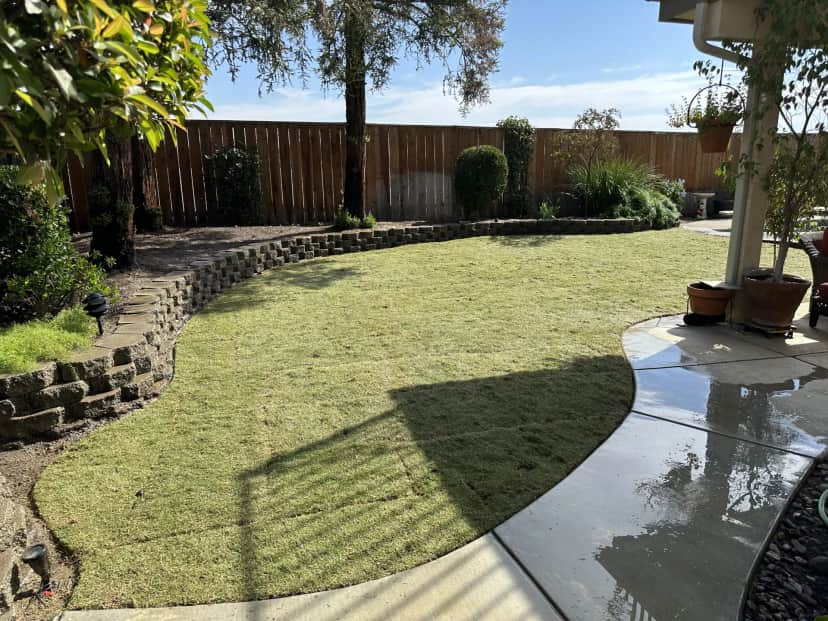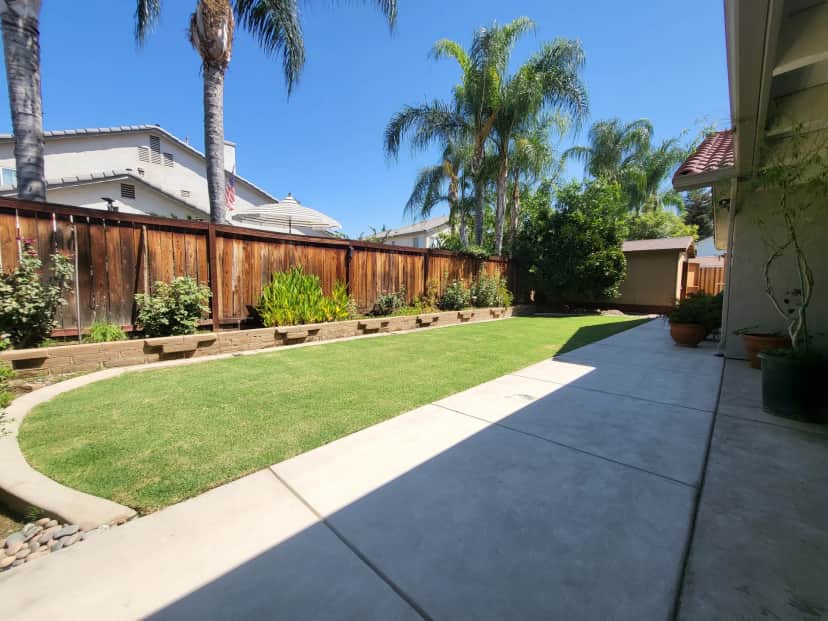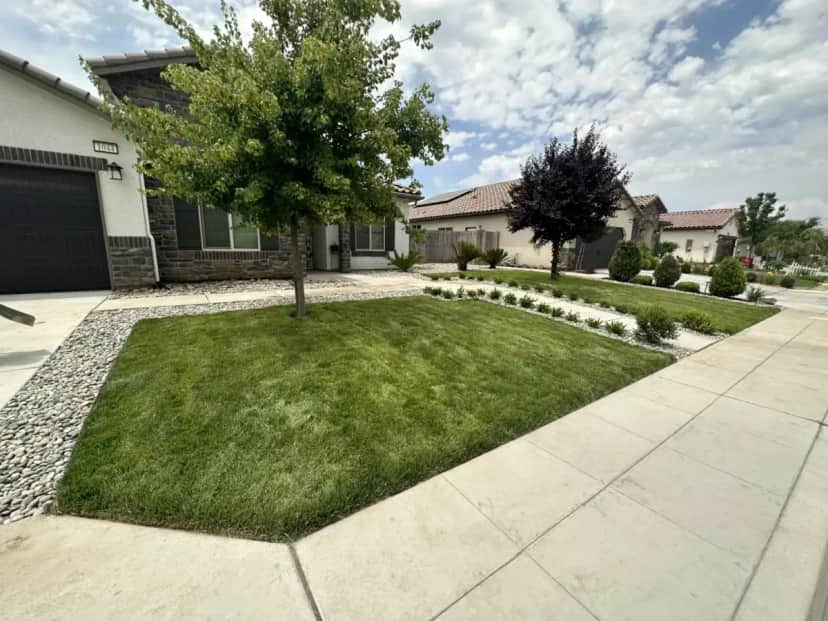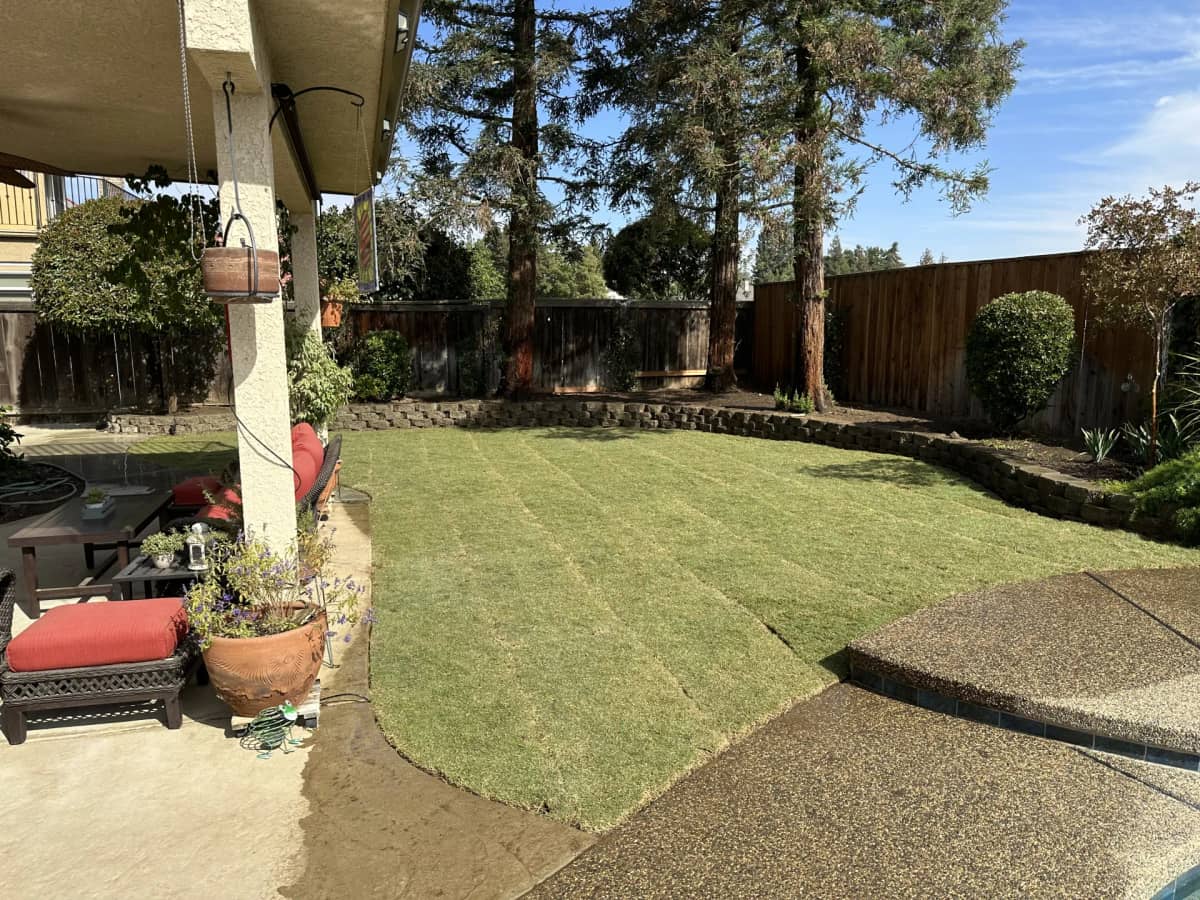
The best grass for Fresno and the Central Valley is Bermuda grass. It earns the top spot because it thrives in extreme heat (100--110 degrees), tolerates our alkaline soil (pH 8.0+), uses less water than any other traditional lawn grass, and repairs itself quickly from damage. For shaded yards, tall fescue is the best alternative. Here is a complete breakdown of every grass type that works --- and does not work --- in Fresno, Kerman, and Clovis.
Grass Types Ranked for Central Valley Conditions
1. Common Bermuda Grass --- Best Overall
Common Bermuda is the workhorse grass of the Central Valley. It is what you will find on most sports fields, parks, and newer residential lawns in Fresno County.
| Factor | Rating |
|---|---|
| Heat tolerance | 5/5 |
| Drought tolerance | 5/5 |
| Alkaline soil tolerance | 5/5 |
| Shade tolerance | 1/5 |
| Wear/traffic tolerance | 5/5 |
| Winter appearance | Dormant (brown Nov--Mar) |
| Water needs | 1--1.5 inches/week in summer |
| Mowing height | 1.5--2 inches |
| Estimated monthly water cost | $40--$80 |
Why it wins in Fresno: Bermuda handles everything the Central Valley throws at it. Triple-digit heat, alkaline clay soil, restricted watering schedules --- Bermuda takes it all and keeps growing. It spreads aggressively via stolons and rhizomes, which means it fills in bare spots and repairs damage on its own.
The tradeoff: Bermuda goes completely dormant from November through March, turning straw-brown. If you want green in winter, you can overseed with annual ryegrass in October for year-round color.
Best for: Full-sun yards, families with kids and pets, budget-conscious homeowners, new construction in Kerman.
2. Hybrid Bermuda (Tifway 419) --- Premium Look
Hybrid Bermuda is the upscale version of common Bermuda. Tifway 419 is the most popular variety and is used on golf course fairways throughout the Valley.
| Factor | Rating |
|---|---|
| Heat tolerance | 5/5 |
| Drought tolerance | 4/5 |
| Alkaline soil tolerance | 5/5 |
| Shade tolerance | 1/5 |
| Wear/traffic tolerance | 5/5 |
| Winter appearance | Dormant (brown Nov--Mar) |
| Water needs | 1--1.5 inches/week in summer |
| Mowing height | 0.75--1.5 inches (requires reel mower for best results) |
| Estimated monthly water cost | $45--$90 |
Why homeowners choose it: Tifway 419 has a finer blade texture, denser growth, and a deeper green color than common Bermuda. It looks like a putting green when properly maintained.
The tradeoff: Hybrid Bermuda requires more precise maintenance. It performs best when mowed with a reel mower at low heights, needs more frequent mowing (sometimes twice per week in peak summer), and does not tolerate neglect as well as common Bermuda. It also must be installed from sod or plugs --- it does not come true from seed.
Best for: Homeowners who want a premium lawn appearance and are willing to invest in higher maintenance, or who plan to hire professional lawn care.
3. Tall Fescue --- Best for Shade
Tall fescue is the most popular cool-season grass in the Central Valley, especially in older Fresno and Clovis neighborhoods with mature shade trees.
| Factor | Rating |
|---|---|
| Heat tolerance | 3/5 |
| Drought tolerance | 3/5 |
| Alkaline soil tolerance | 3/5 |
| Shade tolerance | 4/5 |
| Wear/traffic tolerance | 4/5 |
| Winter appearance | Green year-round (with water) |
| Water needs | 1.5--2+ inches/week in summer |
| Mowing height | 3--4 inches |
| Estimated monthly water cost | $70--$150+ |
Why it works here: Fescue stays green year-round without overseeding, handles partial shade far better than Bermuda, and has a lush, dark green appearance that many homeowners prefer. Modern turf-type tall fescue varieties (like Titan, Rebel, and Bonsai) are significantly more heat-tolerant than older varieties.
The tradeoff: Fescue uses 40--60% more water than Bermuda in summer. On Fresno's 3-day watering schedule with 15-minute station limits, keeping fescue green through July and August is a genuine challenge. It also tends to thin out in extreme heat and may need overseeding every fall to maintain density.
Best for: Shaded yards under large trees, homeowners who prioritize year-round green, north-facing front yards with less direct sun.
For a deeper comparison, read our Bermuda vs. Fescue guide.
4. St. Augustine --- Shade Champion
St. Augustine offers the best shade tolerance of any warm-season grass. It is less common in the Central Valley than in Southern California, but it can work well in specific situations.
| Factor | Rating |
|---|---|
| Heat tolerance | 4/5 |
| Drought tolerance | 2/5 |
| Alkaline soil tolerance | 2/5 |
| Shade tolerance | 5/5 |
| Wear/traffic tolerance | 3/5 |
| Winter appearance | Semi-dormant (slows, may yellow) |
| Water needs | 1.5--2 inches/week in summer |
| Mowing height | 2.5--4 inches |
| Estimated monthly water cost | $70--$130 |
Why some choose it: If you have a heavily shaded yard where Bermuda will not grow and fescue struggles through summer, St. Augustine fills the gap. It is a warm-season grass that handles shade, so it does not need as much water as fescue while still performing in low-light conditions.
The tradeoff: St. Augustine is particularly susceptible to iron chlorosis in our alkaline soil. It shows yellowing faster and more severely than other grass types, requiring regular chelated iron applications. It also has poor cold tolerance and can suffer freeze damage in the coldest Central Valley winters. Additionally, it does not handle heavy foot traffic well.
Best for: Heavily shaded backyards, areas under dense tree canopies, side yards with minimal sun.
5. Buffalo Grass (UC Verde) --- Ultra-Low Water
UC Verde buffalo grass was developed at UC Riverside and is commercially grown right here in Fresno. It is the most drought-tolerant traditional grass option available.
| Factor | Rating |
|---|---|
| Heat tolerance | 4/5 |
| Drought tolerance | 5/5 |
| Alkaline soil tolerance | 4/5 |
| Shade tolerance | 2/5 |
| Wear/traffic tolerance | 3/5 |
| Winter appearance | Dormant (turns tan) |
| Water needs | 0.5--1 inch/week in summer |
| Mowing height | 3--4 inches (or leave unmowed) |
| Estimated monthly water cost | $20--$50 |
Why it is interesting: Buffalo grass needs roughly half the water of Bermuda and can survive on rainfall alone once established (though it looks better with some summer irrigation). It can be left unmowed for a meadow look or mowed to 3--4 inches for a more traditional appearance.
The tradeoff: Buffalo grass has a very different look than traditional lawn grasses --- finer, lighter green, and more open in density. It is slow to establish (2--3 months from plugs), does not handle heavy traffic well, and is not widely available at local sod suppliers. Most Fresno homeowners find it too different from what they expect a lawn to look like.
Best for: Water conservation-focused homeowners, large properties where minimizing water use is the priority, secondary lawn areas that do not get heavy use.
6. Artificial Turf --- The Non-Grass Alternative
While not a grass, artificial turf is worth mentioning because an increasing number of Central Valley homeowners are choosing it, especially for front yards.
| Factor | Rating |
|---|---|
| Heat tolerance | N/A (surface gets very hot) |
| Drought tolerance | 5/5 (zero water) |
| Maintenance | Minimal (occasional rinse and brush) |
| Appearance | Consistent year-round |
| Lifespan | 10--15 years |
| Installation cost | $8--$15 per sq ft installed |
Why homeowners choose it: Zero water, zero mowing, green year-round. For front yards that are primarily decorative, artificial turf eliminates ongoing maintenance entirely.
The tradeoff: The surface temperature of artificial turf can reach 150--170 degrees on a hot Fresno summer day, making it uncomfortable for bare feet, kids, and pets. It also has a significant upfront cost. For a full comparison, read our sod vs. artificial turf guide.
Best Grass for Specific Situations
New construction (bare dirt lot in Kerman or Clovis): Common Bermuda. It is the most forgiving, lowest-cost, and lowest-maintenance option for establishing a new lawn from scratch. Most new homes in Kerman subdivisions get Bermuda sod.
Shady backyard under large trees: Tall fescue or St. Augustine, depending on how much shade. If the area gets less than 4 hours of direct sun, fescue is the safer pick. If it gets less than 2 hours, consider shade-tolerant ground cover instead of grass.
Front yard curb appeal: Hybrid Bermuda (Tifway 419) for full sun, or tall fescue for a year-round green look. Both look excellent when well-maintained.
Backyard play area for kids and pets: Common Bermuda. Nothing handles heavy traffic and recovers from damage faster. It is also the least likely to thin out in high-use areas.
Maximum water conservation: Buffalo grass for a living lawn, or artificial turf for zero water. Bermuda is the best option if you want a traditional lawn feel with the lowest practical water use.
How Alkaline Soil Affects Your Grass Choice
Fresno's soil pH of 8.0 and above is one of the most important factors in grass selection. Here is why it matters:
Iron becomes unavailable. At pH 8.0+, iron binds to calcium in the soil and becomes inaccessible to grass roots. This causes iron chlorosis --- yellow blades with green veins. Every grass type is affected, but some are far more susceptible than others.
Sensitivity ranking (most to least affected):
- St. Augustine --- shows chlorosis quickly and severely
- Tall fescue --- moderate susceptibility
- Buffalo grass --- mild susceptibility
- Common Bermuda --- least affected, most tolerant
- Hybrid Bermuda --- very tolerant
What this means for your choice: If you do not want to deal with regular iron treatments, Bermuda is the most forgiving grass for our alkaline soil. If you choose fescue or St. Augustine, plan on applying chelated iron (EDDHA formulation) 3--4 times per year to prevent yellowing.
For more on treating iron chlorosis, read our guide to yellow grass and iron chlorosis in Fresno.
Maintenance Comparison Table
| Factor | Common Bermuda | Hybrid Bermuda | Tall Fescue | St. Augustine | Buffalo Grass |
|---|---|---|---|---|---|
| Mowing frequency | Weekly | 1--2x/week | Weekly | Every 10--14 days | Bi-weekly or none |
| Fertilizer (apps/year) | 3--4 | 4--6 | 4--5 | 3--4 | 1--2 |
| Iron treatments/year | 1--2 | 1--2 | 3--4 | 4--6 | 2--3 |
| Water (inches/week, summer) | 1--1.5 | 1--1.5 | 1.5--2+ | 1.5--2 | 0.5--1 |
| Annual maintenance cost (DIY) | $400--$800 | $600--$1,200 | $600--$1,000 | $500--$900 | $200--$400 |
| Annual maintenance cost (pro) | $1,600--$2,800 | $2,000--$3,500 | $1,800--$3,000 | $1,800--$2,800 | $800--$1,500 |
Our Recommendation
After installing and maintaining thousands of lawns across the Central Valley, our recommendation is straightforward:
- For most Fresno-area yards: Common Bermuda. It handles our heat, soil, and water restrictions better than anything else, and it costs the least to maintain.
- If you have shade: Tall fescue in areas with 4+ hours of sun, or consider drought-tolerant ground cover for deep shade.
- If you want a premium look: Hybrid Bermuda (Tifway 419) with professional maintenance.
- If water conservation is your top priority: Buffalo grass or artificial turf.
The most important factor in any grass choice is proper installation --- soil prep, grading, and irrigation setup. The best grass on poorly prepared soil will always underperform average grass on well-prepared soil.
Get Expert Help Choosing
Not sure which grass is right for your yard? We will come to your property, assess your sun exposure, soil conditions, and usage patterns, and recommend the best option.
Request a free consultation or call (559) 809-1230. We provide sod installation and lawn care across Kerman, Fresno, and Clovis.