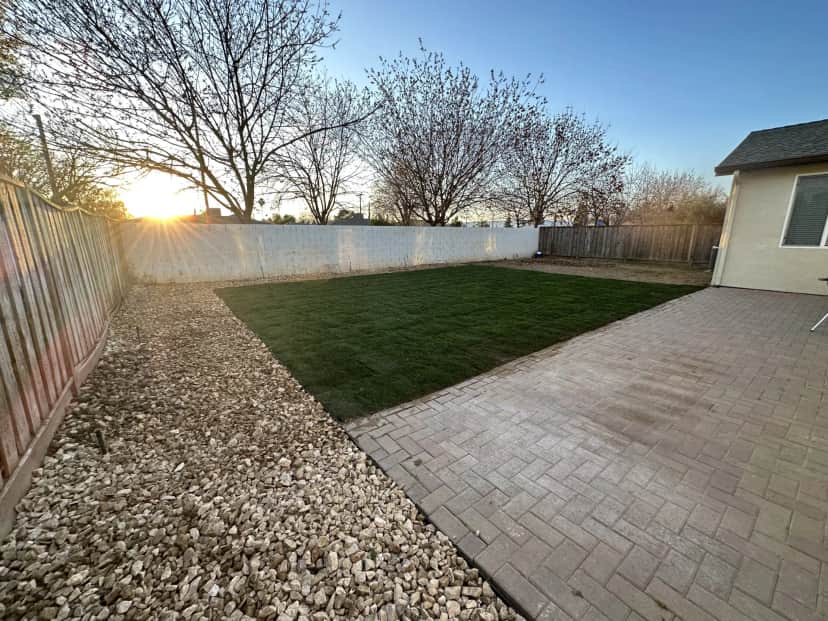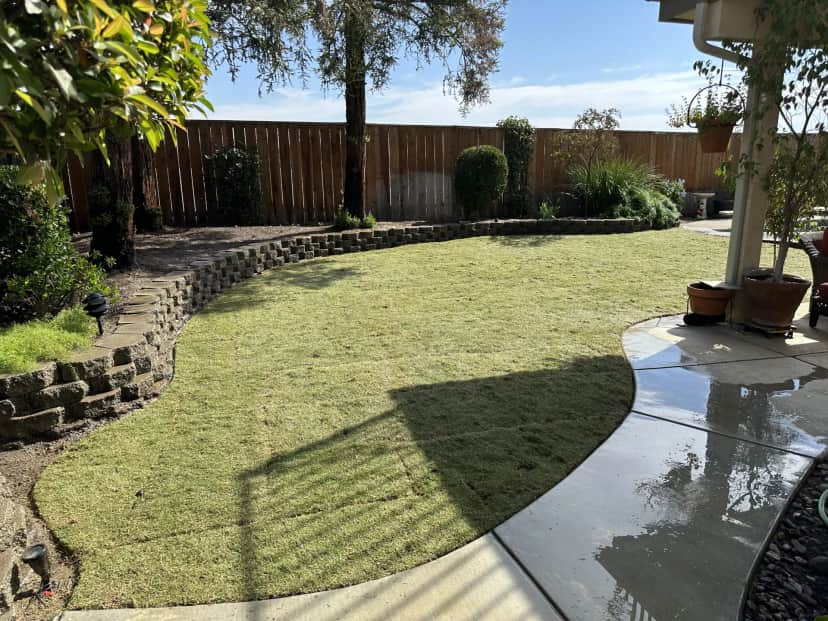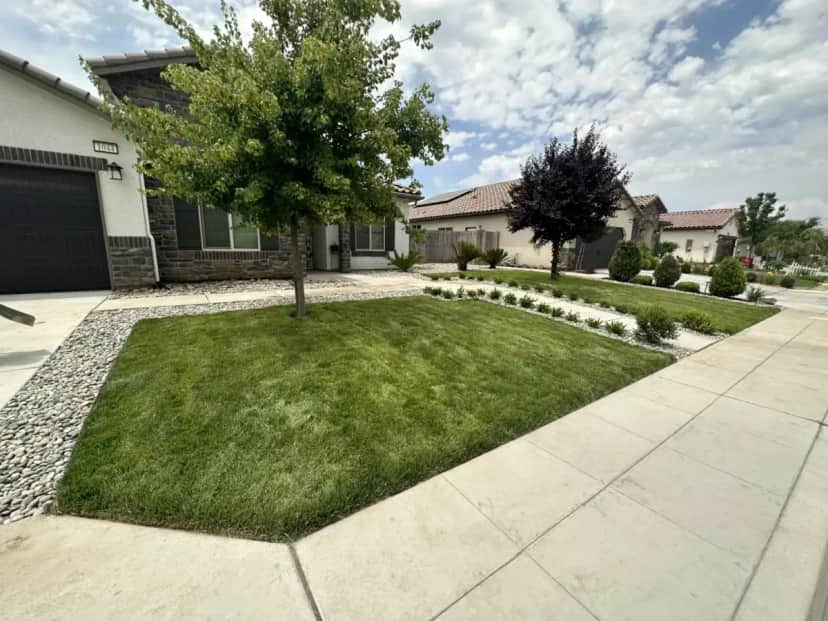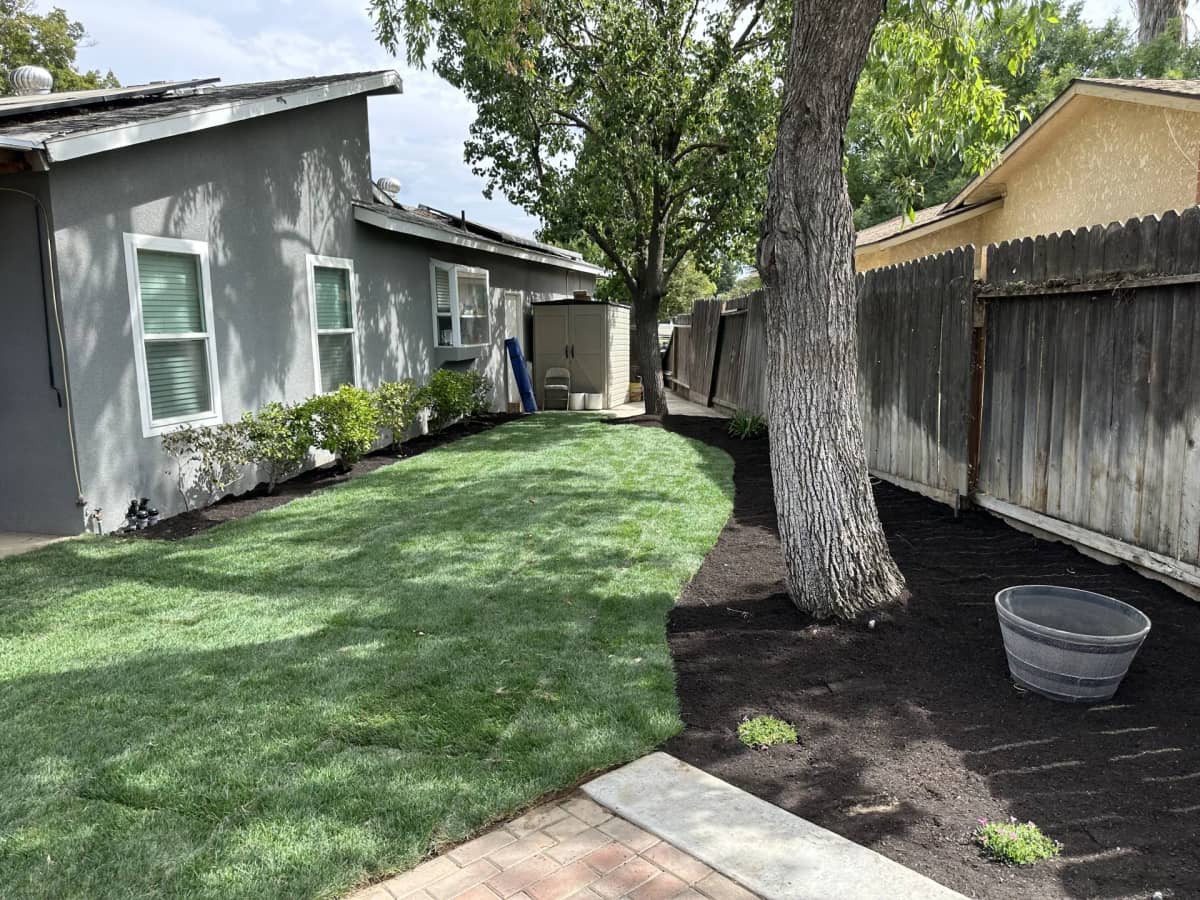
To keep your Bermuda lawn green through winter in the Central Valley, overseed with annual ryegrass in mid-October to mid-November when nighttime temperatures consistently drop below 65°F. Use 8–10 lbs of seed per 1,000 sq ft, and your lawn will stay green from November through April while the Bermuda is dormant underneath.
Why Does My Bermuda Lawn Turn Brown in Winter?
Bermuda grass goes dormant when soil temperatures drop below 55°F, which typically happens in November in Fresno, Kerman, and Clovis. During dormancy, Bermuda stops growing and turns straw-brown. It's not dead — it will green up again in March or April when temperatures rise — but it looks rough for 4–5 months.
This is completely normal and doesn't indicate a lawn problem. But if you want a green lawn year-round, overseeding with annual ryegrass is the solution Central Valley homeowners have used for decades.
What Is Overseeding?
Overseeding means spreading ryegrass seed directly over your existing Bermuda lawn. The ryegrass germinates quickly (5–7 days), grows through the cool months when Bermuda is dormant, and then naturally dies off in late spring as temperatures rise and Bermuda takes over again. It's a temporary green layer on top of your permanent Bermuda lawn.
When Should I Overseed in the Central Valley?
The ideal window is mid-October to mid-November. Timing is critical:
| Timing | Result |
|---|---|
| Too early (September) | Bermuda is still active and competes with ryegrass. Both struggle. |
| Ideal (mid-Oct to mid-Nov) | Bermuda is slowing down; ryegrass establishes in cool weather |
| Too late (December+) | Soil is too cold for reliable germination. Thin, patchy results. |
Watch nighttime temperatures: Once nights consistently drop below 65°F but daytime highs are still above 70°F, that's your green light. In Fresno, this usually happens around the third week of October.
Step-by-Step: How to Overseed Bermuda with Ryegrass
Step 1: Mow Low
Scalp your Bermuda lawn to about 1 inch — lower than your normal mowing height. This exposes soil and allows ryegrass seed to make good contact with the ground. Bag the clippings so they don't smother the new seed.
Step 2: Prepare the Surface
Lightly rake or dethatch the lawn to create small openings in the soil surface. If your lawn has heavy thatch (that spongy layer between grass and soil), a light dethatching pass is especially helpful. Core aeration before overseeding improves results significantly on our heavy clay soil.
Step 3: Spread the Seed
Use annual ryegrass (not perennial ryegrass — annual dies off naturally in spring, which is what you want so it doesn't compete with your Bermuda).
Application rate: 8–10 lbs per 1,000 sq ft for thick coverage. Use a broadcast spreader for even distribution. Make two passes in perpendicular directions to avoid bare spots.
Cost: Annual ryegrass seed costs approximately $1–$2 per pound, so plan on $8–$20 per 1,000 sq ft for seed alone.
Step 4: Lightly Cover
Spread a thin layer of topdressing — compost, peat moss, or fine topsoil — over the seed. Just enough to barely cover the seeds (1/8 to 1/4 inch). This protects seeds from birds and helps retain moisture.
Step 5: Water Frequently
This is the most important step. For the first 10–14 days, keep the seedbed consistently moist:
- Water 2–3 times per day with light, short cycles (5 minutes each)
- Morning, midday, and late afternoon
- The goal is to keep the top 1 inch of soil moist without creating puddles
- New seed establishment qualifies for a short-term watering exemption in most cities — check with your water provider
After germination (visible green fuzz at 5–7 days), reduce to daily watering for a week, then transition to your normal watering schedule.
Step 6: First Mow
Once the ryegrass reaches 3–4 inches tall (usually 3–4 weeks after seeding), give it its first mow at 2.5–3 inches. Use a sharp blade — new grass tears easily with a dull mower.
How Do I Transition Back to Bermuda in Spring?
The beauty of annual ryegrass is that it handles the transition itself:
- As daytime temperatures consistently hit 80°F+ (typically April in the Central Valley), ryegrass begins to thin and die naturally
- At the same time, Bermuda comes out of dormancy and starts growing
- Gradually lower your mowing height back to 1.5–2 inches to let Bermuda take over
- The ryegrass dies completely by late May or early June
Do not apply herbicide to kill the ryegrass — it will die on its own, and herbicide would harm the awakening Bermuda underneath.
How Much Does Overseeding Cost?
| Component | DIY Cost (per 1,000 sq ft) | Professional Cost |
|---|---|---|
| Ryegrass seed (8–10 lbs) | $8–$20 | Included |
| Topdressing/compost | $20–$40 | Included |
| Spreader rental (if needed) | $15–$30 | Included |
| Professional overseeding service | — | $80–$150 per 1,000 sq ft |
Professional overseeding includes mowing low, dethatching if needed, seed application, topdressing, and initial watering instructions. It's a one-visit service that takes a few hours.
Common Overseeding Mistakes
- Wrong seed type — Use annual ryegrass, not perennial. Perennial ryegrass persists through summer and creates a tangled mess with your Bermuda.
- Skipping the scalp mow — Seed landing on tall grass never reaches the soil. Contact is everything.
- Under-watering the first two weeks — Ryegrass seed needs consistent moisture to germinate. Letting it dry out even once can kill the emerging seedlings.
- Seeding too early — If Bermuda is still actively growing, it outcompetes the ryegrass. Wait until it starts slowing down.
- Too much seed — More than 10 lbs per 1,000 sq ft creates overcrowding, thin blades, and disease problems. Stick to the recommended rate.
Is Overseeding Worth It?
That depends on how much the brown winter lawn bothers you. Here's the honest breakdown:
Overseed if:
- Year-round green is important to you
- Your front yard is highly visible and curb appeal matters
- You enjoy a lush lawn during the pleasant winter months
- You're willing to spend $100–$300 per season for the process
Skip overseeding if:
- You're fine with Bermuda's winter dormancy (it's completely healthy)
- You prefer to spend the money elsewhere
- You have heavy shade areas (ryegrass needs sun too)
- You plan to do major lawn renovation in spring
We Can Handle It for You
Overseeding is a once-a-year task, but timing and technique matter. Our lawn care maintenance service includes overseeding as a seasonal add-on. We handle the scalp mow, seed application, topdressing, and follow-up — you just enjoy the green.
Book a service or call (559) 809-1230. We serve Kerman, Fresno, Clovis, and surrounding Central Valley communities.