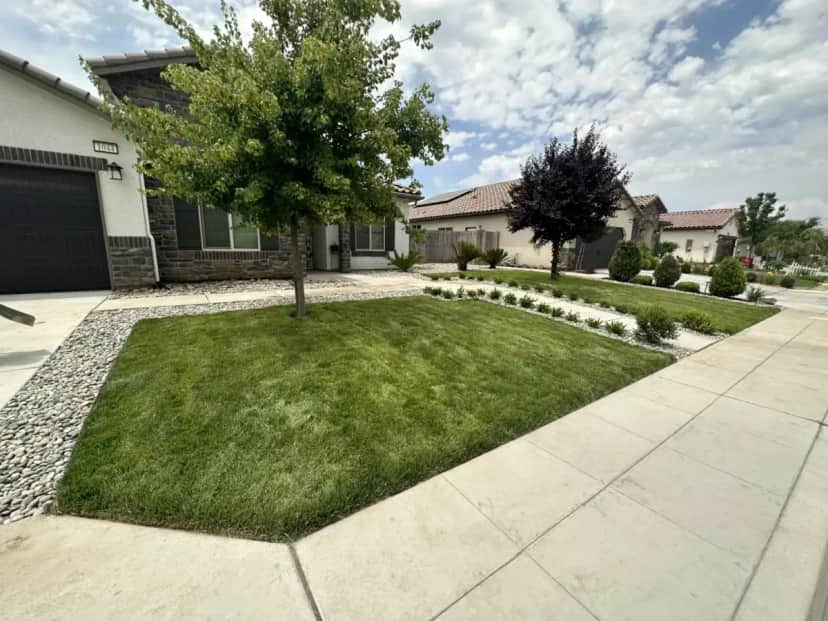
Central Valley lawns need different care every month. Fresno's extreme summers, mild winters, alkaline soil, and watering restrictions mean a generic lawn care calendar won't work here. This month-by-month guide is tailored specifically to Kerman, Fresno, and Clovis conditions.
January: Plan and Prepare
- Mowing: Not needed — warm-season grasses (Bermuda) are dormant. Fescue may need a light trim if temperatures are mild.
- Watering: Winter schedule — once per week (odd addresses Saturday, even Sunday in Fresno).
- To-do: Order a soil test ($15–$30 at Alluvial Soil Lab in Fresno) to check pH and nutrients. Plan spring projects. Inspect and clean sprinkler heads. Sharpen mower blades.
February: Early Spring Prep
- Mowing: Begin mowing fescue if it's growing. Bermuda is still dormant.
- Watering: Continue winter schedule.
- Weed control: Apply pre-emergent herbicide in mid-to-late February before crabgrass germinates. Soil temperature needs to reach 55°F consistently.
- To-do: Clean up winter debris. Prune deciduous trees and shrubs before spring growth begins. Check sprinkler system for winter damage.
March: Spring Kickoff
- Mowing: Begin regular mowing as grass starts active growth. Bermuda begins greening up when soil temperatures hit 65°F. Mow fescue at 3–4 inches, Bermuda at 1.5–2 inches.
- Watering: Transition to spring watering. Fresno's 3-day schedule begins April 1, so prepare your timer now.
- Fertilizing: Apply first fertilizer of the year — a balanced slow-release formula (15-15-15 or similar). For alkaline soil, use ammonium sulfate-based nitrogen.
- To-do: Aerate if you didn't in fall. Start up and test full sprinkler system. Address any dead patches with spot sod repair.
April: Growth Accelerates
- Mowing: Weekly mowing begins. Never cut more than 1/3 of the blade at a time.
- Watering: 3-day schedule begins April 1 in Fresno. Odd addresses Tue/Thu/Sat, even addresses Wed/Fri/Sun. No watering 10 AM – 6 PM. Maximum 15 minutes per station.
- Fertilizing: Apply chelated iron (EDDHA) if yellowing from iron chlorosis appears — this is common in our alkaline soil.
- Weed control: Hand-pull or spot-treat any weeds that broke through the pre-emergent.
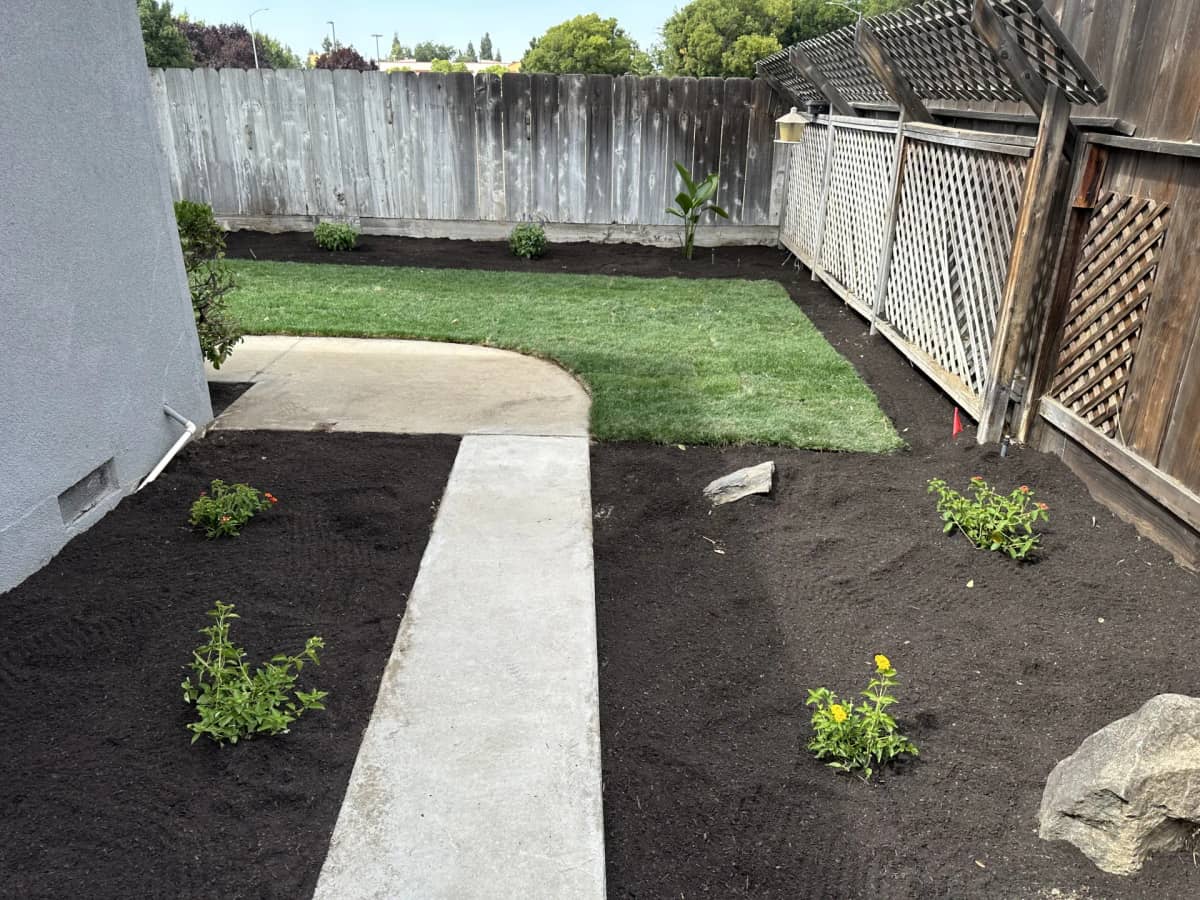
- To-do: Mulch flower beds and around trees to conserve moisture heading into summer. See our mulch service.
May: Prepare for Heat
- Mowing: Weekly. Raise Bermuda mowing height to 2 inches for summer. Keep fescue at 3.5–4 inches.
- Watering: Water as deeply as possible within the 15-minute station limit. Run cycles — water for 5 minutes, wait 30 minutes for absorption in clay soil, then water 5 more minutes.
- Fertilizing: Apply slow-release nitrogen. Avoid fast-release fertilizers that force growth the grass can't sustain in heat.
- To-do: Check sprinkler coverage — walk the yard during watering and fix any dry spots, broken heads, or misting issues. Now is the time before 100°F arrives.
June–August: Summer Survival Mode
These are the toughest months for Central Valley lawns, with 38+ days above 100°F in Fresno.
- Mowing: Weekly. Keep blades sharp — dull cuts tear grass and increase heat stress. Mow in the morning before heat peaks.
- Watering: Maximize every drop. Water between 4–8 AM only. If your lawn shows stress (blue-gray color, footprints that don't spring back), you may need to adjust sprinkler efficiency rather than increase water — you're limited to 3 days per week.
- Fertilizing: Do NOT apply high-nitrogen fertilizer in July–August. This forces growth the grass cannot sustain. If you see yellowing, apply iron sulfate or chelated iron (EDDHA) instead.
- Pest watch: Monitor for grubs (brown patches that peel up), chinch bugs (irregular brown patches at edges), and sod webworms (chewed blades, moths at dusk). Early treatment prevents major damage.
- To-do: Accept that some stress is normal. Bermuda handles it well. Fescue may thin in full sun — focus on shade-helping strategies. Do NOT overwater trying to compensate — you'll raise soil pH and invite fungal disease.
September: Transition to Fall
- Mowing: Continue bi-weekly. Gradually lower Bermuda mowing height back to 1.5 inches.
- Watering: Still on the 3-day schedule through October 31.
- Overseeding: If you want a green lawn through winter, overseed Bermuda with annual ryegrass in mid-September through mid-October when nighttime temperatures drop below 65°F. Apply 8–10 lbs of ryegrass seed per 1,000 sq ft.
- Fertilizing: Apply fall fertilizer — balanced formula or winterizer with higher potassium to prepare roots for winter.
- To-do: Core aerate now if you didn't in spring. This is the best time for Central Valley clay soil. Reseed or patch any bare spots.
October: Fall Recovery
- Mowing: Bermuda growth slows significantly. Overseeded ryegrass will be establishing. Fescue enters its best growth period.
- Watering: Continue 3-day schedule until November 1, then switch to winter schedule (1 day per week).
- Fertilizing: Last fertilizer application of the year. Use a winterizer formula.
- To-do: Final sprinkler system check before winter. Clean up fallen leaves — a thick leaf layer smothers grass. Tree trimming season begins for deciduous trees.
November–December: Winter Rest
- Mowing: Bermuda stops growing and goes dormant (brown). Overseeded ryegrass and fescue may still need occasional mowing.
- Watering: Winter schedule — once per week. Reduce further during rainy periods.
- To-do: Clean and store equipment. Plan spring projects. This is a good time to tackle landscape design planning so you're ready when temperatures warm up. Prune dormant trees and shrubs (November–February is ideal for most species).
Let Us Handle the Calendar
Keeping track of seasonal lawn care is a lot of work. That's exactly what our lawn care maintenance service does — we adjust mowing height, fertilization, iron treatments, and pest monitoring throughout the year so your lawn stays healthy without you having to think about it.
Book a service or call (559) 809-1230. We serve Kerman, Fresno, Clovis, and surrounding Central Valley communities.