Spring is when your Central Valley lawn either sets itself up for a great year or falls behind. The window between February and May is critical — miss a task and you'll be fighting weeds, yellow patches, or dead spots all summer. Here's the complete spring lawn care checklist for Fresno, Kerman, and Clovis homeowners, in the exact order you should tackle each task.
Quick Checklist Summary
- February–March: Apply pre-emergent weed control
- March: First fertilizer application (ammonium sulfate)
- March: Service your mower (sharpen blades, change oil, check air filter)
- March–April: Start mowing — 2 inches, gradually lower to 1.5 for Bermuda
- April: Sprinkler system startup and inspection
- April: Apply chelated iron (EDDHA) for iron chlorosis prevention
- April–May: Overseed bare patches (Bermuda seed needs 65°F+ soil)
- May: Transition to summer watering schedule (3-day schedule)
- May: Apply slow-release nitrogen fertilizer
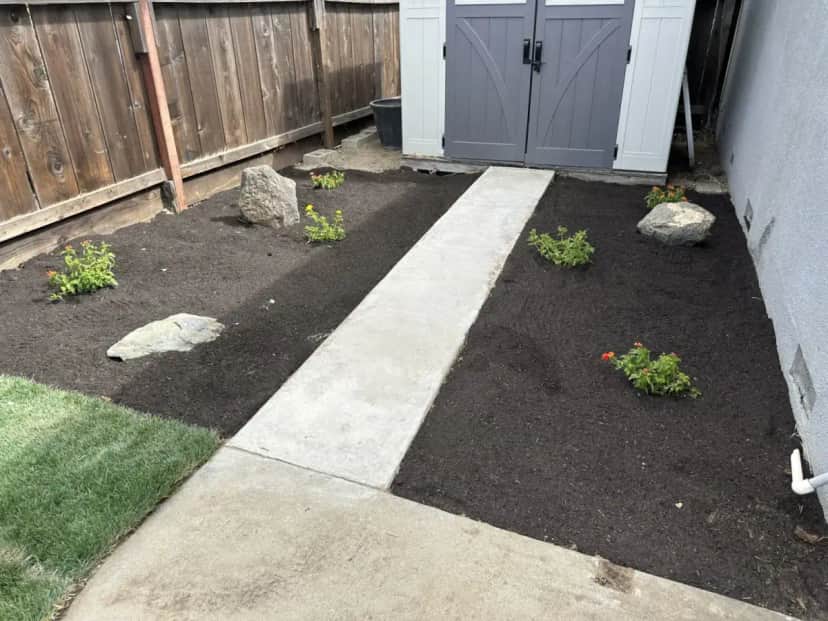
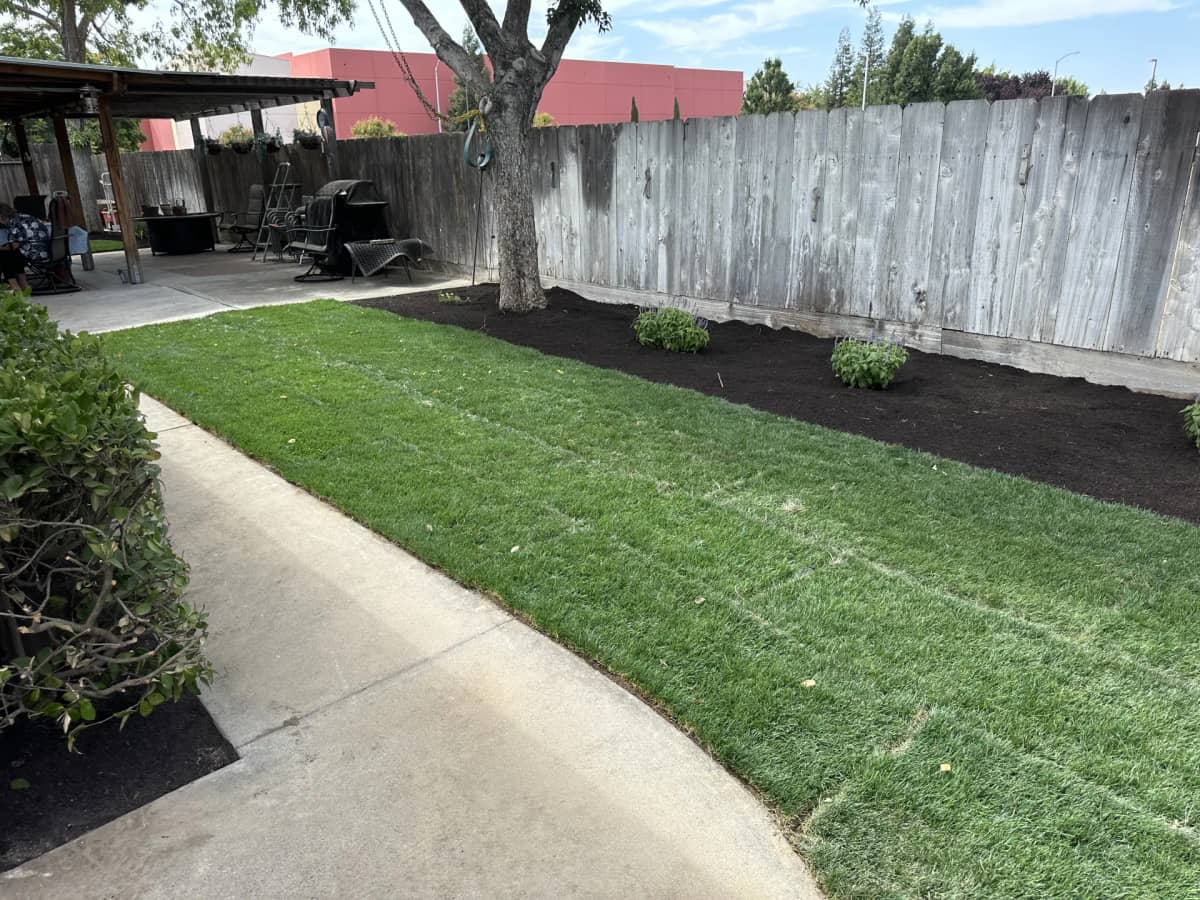
- May: Mulch flowerbeds (2–3 inches) before summer heat
Now let's break down each task with specific timing, products, and pro tips for our climate.
February–March: Apply Pre-Emergent Weed Control
When: Mid-February to early March, before soil temperatures consistently hit 55°F.
What: Apply a pre-emergent herbicide containing prodiamine or pendimethalin. This creates a chemical barrier in the top layer of soil that prevents crabgrass, spurge, and other warm-season weeds from germinating. It does not kill existing weeds — it prevents new ones.
Why this matters in the Central Valley: Our mild winters mean crabgrass can germinate as early as late February in Fresno and Kerman. By the time you see crabgrass in your lawn, it's too late for pre-emergent. The key is to apply before germination.
Pro Tip: Use a soil thermometer (available at any garden center for $10) and check your soil temperature at 2 inches deep for three mornings in a row. When it consistently reads 50–55°F, it's time to apply. In most Central Valley neighborhoods, this happens around the second or third week of February.
March: First Fertilizer Application
When: Early to mid-March, once Bermuda starts showing green.
What: Apply ammonium sulfate (21-0-0) at a rate of 5 lbs per 1,000 sq ft. This is the best nitrogen source for Central Valley lawns because it also lowers soil pH slightly, which helps counteract our naturally alkaline soil (pH 8.0+).
Why this matters: Bermuda grass coming out of dormancy is hungry. Nitrogen fuels the rapid blade and runner growth that fills in thin spots from winter. Using the wrong fertilizer type in alkaline soil wastes your money — standard urea or high-pH fertilizers make iron lockout even worse.
Pro Tip: Avoid fertilizers that contain phosphorus (the middle number in N-P-K) unless a soil test specifically shows a phosphorus deficiency. Central Valley clay soil almost always has plenty of phosphorus, and excess phosphorus interferes with iron uptake — compounding the iron chlorosis problem that plagues local lawns.
March: Service Your Mower
When: Before you make the first mow of the season.
What: Sharpen mower blades, change the oil, replace the air filter, and check the spark plug. If you have a battery-powered mower, clean the deck and sharpen or replace the blades.
Why this matters: Dull blades tear grass instead of cutting it cleanly, leaving ragged brown tips that are more vulnerable to disease and heat stress. In a climate where every blade of grass needs to be as healthy as possible to survive 100°F+ summers, starting with a sharp cut makes a real difference.
Pro Tip: You can take your blade to most local hardware stores (Fresno Ag Hardware, Home Depot) and have it sharpened for $5–$10. Do it at least twice per season — once in March and once in June.
March–April: Start Mowing
When: Begin once Bermuda is actively growing (typically mid-March). Fescue lawns should already be getting regular cuts.
What: Start mowing at 2 inches and gradually lower to 1.5 inches for Bermuda over 2–3 weeks. For fescue, maintain 3–3.5 inches. Never remove more than one-third of the blade height in a single mow.
Why this matters: The first few mows of spring set the tone. Cutting too low too soon scalps the lawn and exposes soil to sunlight, which encourages weed germination — exactly what you just applied pre-emergent to prevent.
Pro Tip: Leave the clippings on the lawn (grasscycling). Spring clippings break down quickly and return nitrogen to the soil. Bagging is unnecessary unless clumps are thick enough to smother the grass underneath.
April: Sprinkler System Startup
When: Early April, before Fresno's 3-day watering schedule begins on April 1.
What: Turn on your system and run every zone manually. Walk the yard while each zone runs and check for broken heads, misaligned spray patterns, clogged nozzles, and leaks at connections. Adjust timers for the spring schedule.
Why this matters: Winter freezes (yes, even mild Central Valley freezes) crack plastic sprinkler heads and fittings. One broken pop-up head can waste 5+ gallons per minute — that's over 75 gallons in a single 15-minute cycle. Multiply that by three watering days per week and you're losing hundreds of gallons (and dollars) per month.
Pro Tip: Check for overspray onto sidewalks, driveways, and streets. Fresno, Kerman, and Clovis all issue warnings and fines for water waste, and overspray is one of the most common violations. Adjust any head that sprays hardscape. Need help? Our sprinkler repair service covers all three cities.
April: Apply Chelated Iron (EDDHA)
When: Mid-April, once Bermuda is fully green and actively growing.
What: Apply chelated iron in EDDHA form as either a granular soil application or liquid spray. EDDHA is the only chelate type that remains effective at pH 8.0+, which is standard for Central Valley soil. Regular iron sulfate or DTPA-chelated iron won't work in our soil conditions.
Why this matters: Iron chlorosis — where grass turns yellow even though you're watering — is the single most common lawn problem in Fresno, Kerman, and Clovis. It's not a watering issue. It's caused by alkaline soil locking iron into forms that plant roots can't absorb. Preventive iron application in April keeps lawns dark green instead of washed-out yellow.
Pro Tip: Look for products labeled specifically as "EDDHA iron" or "chelated iron for alkaline soil." Apply in the morning and water in immediately. Repeat every 6–8 weeks through September.
April–May: Overseed Bare Patches
When: Late April through May, once soil temperatures are consistently above 65°F.
What: Rake bare areas to loosen the top quarter-inch of soil, spread Bermuda grass seed at 2–3 lbs per 1,000 sq ft for bare spots, cover lightly with a thin layer of soil or compost, and keep moist (not soggy) for 10–14 days until germination.
Why this matters: Winter dormancy, foot traffic, and pet damage leave bare patches in most Bermuda lawns. Spring is the best time to fill these in because Bermuda seed needs warm soil to germinate. Seeding in March when the soil is still below 60°F leads to poor results.
Pro Tip: For large bare areas (bigger than a few square feet), sod patching is faster and more reliable than seeding. We handle sod installation of any size, from small patch repairs to full yard installs.
May: Transition to Summer Watering Schedule
When: May 1 or when daytime temps regularly exceed 90°F.
What: Adjust your sprinkler timer to maximize each of your three weekly watering days. The best approach is two short cycles per station (for example, 12 minutes at 6 AM and 12 minutes at 7 AM) rather than one long cycle. This allows the first cycle to soak in before the second, giving you deeper water penetration without runoff.
Why this matters: Fresno's 3-day watering schedule means you can't compensate for poor watering technique by just watering more often. Every watering day has to count.
Pro Tip: May is when many homeowners notice dry spots that weren't visible in cooler months. If specific areas are browning while the rest of the lawn is green, you likely have a coverage gap — a head that's not rotating fully, a nozzle that's clogged, or a zone with low pressure. Fix it now before summer heat makes it worse.
May: Apply Slow-Release Nitrogen Fertilizer
When: Mid to late May.
What: Apply a slow-release nitrogen fertilizer (look for "slow-release" or "controlled-release" on the label) at 1 lb of actual nitrogen per 1,000 sq ft. This feeds the lawn steadily through June and into early July without causing a flush of growth that the grass can't sustain in extreme heat.
Why this matters: A quick-release fertilizer in May pushes aggressive top growth right as temperatures climb toward triple digits. The grass grows fast but can't support all that blade tissue when it's 105°F. Slow-release gives sustained nutrition without the boom-and-bust cycle.
Pro Tip: This is your last fertilizer application until September. Do not fertilize in July or August — it does more harm than good in 100°F+ heat.
May: Mulch Flowerbeds Before Summer
When: Late May, before the first heat wave.
What: Apply 2–3 inches of bark mulch or wood chips around trees, shrubs, and flowerbeds. Keep mulch 2–3 inches away from plant stems and tree trunks to prevent rot.
Why this matters: Mulch is your best defense against Central Valley summer heat. It reduces soil temperature by up to 10°F, retains moisture between watering days, and suppresses weeds. Beds without mulch dry out fast in 100°F+ weather, and you'll spend more on water trying to keep plants alive.
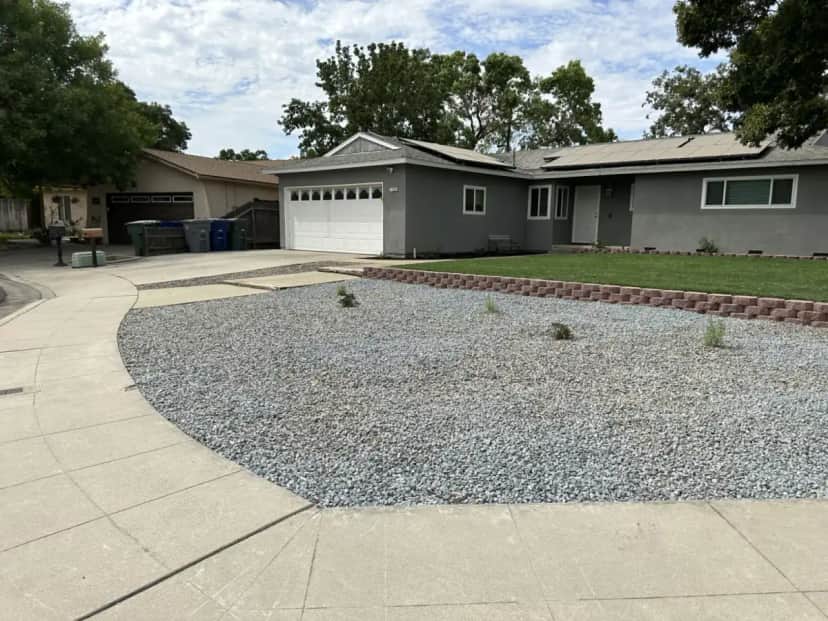
Pro Tip: Avoid rock/gravel mulch in planting beds. While it looks clean, rock absorbs and radiates heat, making the soil hotter — the opposite of what your plants need in a Central Valley summer. Save rock for non-planted areas. We install mulch and flowerbeds throughout Fresno, Kerman, and Clovis.
Your Spring Sets the Stage
Every task on this list builds on the one before it. Pre-emergent prevents weeds so your fertilizer feeds grass, not competitors. Iron treatments prevent chlorosis so your lawn stays green instead of yellow. Sprinkler maintenance ensures every drop of water reaches roots instead of sidewalks. Skip a step and you'll be playing catch-up all summer.
For a deeper month-by-month breakdown that covers all four seasons, check out our full Central Valley Lawn Care Calendar.
Let Us Handle Your Spring Lawn Care
We offer complete lawn care maintenance plans that cover every task on this checklist — pre-emergent, fertilization, iron treatments, mowing, and sprinkler checks — timed specifically for Central Valley conditions.
Schedule a spring tune-up or call us at (559) 809-1230. We serve Kerman, Fresno, Clovis, and surrounding communities.